An automatic watch has no battery. It converts the motion of your wrist into stored energy using a weighted rotor, a mainspring, and a gear train with over 100 parts. The concept was invented in 1770 by Abraham-Louis Perrelet. 256 years later, the principle is identical. Here's how every part works.
The Core Idea
An automatic watch converts kinetic energy — the movement of your wrist — into potential energy stored in a coiled spring. That spring unwinds at a controlled rate, driving gears that move the hands. No battery. No external power source. Just physics.
The system has five essential components: the rotor, the mainspring, the gear train, the escapement, and the balance wheel. Each one does exactly one job. Together, they keep time.
The Rotor
The rotor is a semicircular weight, usually made of tungsten or brass, mounted on a bearing at the centre of the movement. It spins freely — 360 degrees in either direction — in response to the motion of your wrist. Walk, gesture, turn a steering wheel, lift a cup: the rotor moves.
As the rotor spins, it engages a series of reduction gears that convert its rotation into the winding of the mainspring. Most modern automatics use a bidirectional winding system — the rotor winds the mainspring whether it spins clockwise or counter-clockwise. Older designs wound in only one direction; the other direction spun freely. Bidirectional winding is more efficient and is standard in movements like the Seiko NH35 and Miyota 9015 that power most Indian micro-brand watches.
The Mainspring
The mainspring is a long, thin strip of special alloy steel coiled inside a barrel. When the rotor winds it, the spring tightens. When released, the spring wants to uncoil — and that uncoiling force is the energy that drives the entire watch.
A fully wound Seiko NH35 mainspring stores approximately 41 hours of energy — its "power reserve." This means if you take the watch off your wrist on Friday evening, it will continue running until Sunday morning. A Miyota 9015 stores 42 hours. Higher-end movements can store 72 hours or more.
The mainspring doesn't release its energy all at once — it feeds it through the gear train at a precisely controlled rate. This is the mechanical genius of the system: converting a spring's brute force into the measured, even release that timekeeping requires.
The Gear Train
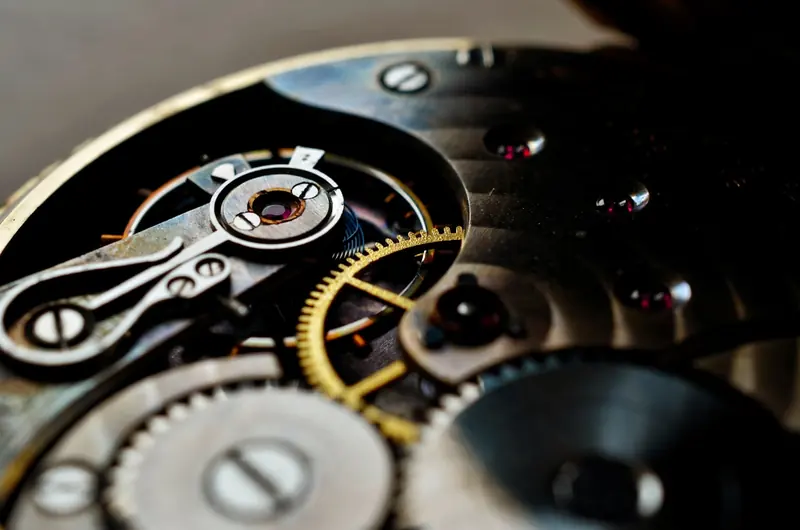
The gear train is a series of interconnected wheels and pinions that step down the mainspring's energy and distribute it to the hands. The centre wheel typically rotates once per hour and drives the minute hand. A motion work gears this down further — 12:1 — to drive the hour hand, which completes one rotation every twelve hours.
The fourth wheel in the train usually rotates once per minute, driving the second hand. Each wheel in the train is carefully sized so that the ratios produce exactly the rotations needed for accurate timekeeping.
The Escapement
The escapement is the regulator — the component that prevents the mainspring from uncoiling all at once. It consists of the escape wheel (a toothed wheel) and the pallet fork (a lever with two jewelled pallets).
The pallet fork rocks back and forth, alternately catching and releasing the teeth of the escape wheel. Each "tick" you hear is one tooth being released — one precisely measured unit of energy passing through the system. The Swiss lever escapement, used in virtually all modern mechanical watches, releases energy in increments of exactly 1/6, 1/8, or 1/10 of a second, depending on the movement's beat rate.
The Balance Wheel
The balance wheel is the heartbeat. It oscillates back and forth at a constant frequency, driven by the escapement and regulated by a hairspring — an incredibly fine spiral spring that provides the restoring force. The balance wheel's oscillation determines the watch's accuracy.
The NH35 beats at 21,600 vibrations per hour (vph) — 6 beats per second. The Miyota 9015 beats at 28,800 vph — 8 beats per second. Higher beat rates generally produce smoother second hand sweeps and better resistance to positional errors. This is why the second hand on an automatic watch sweeps rather than ticks — it's moving in tiny increments 6 or 8 times per second, fast enough to appear continuous.
Why It Matters for Indian Watches
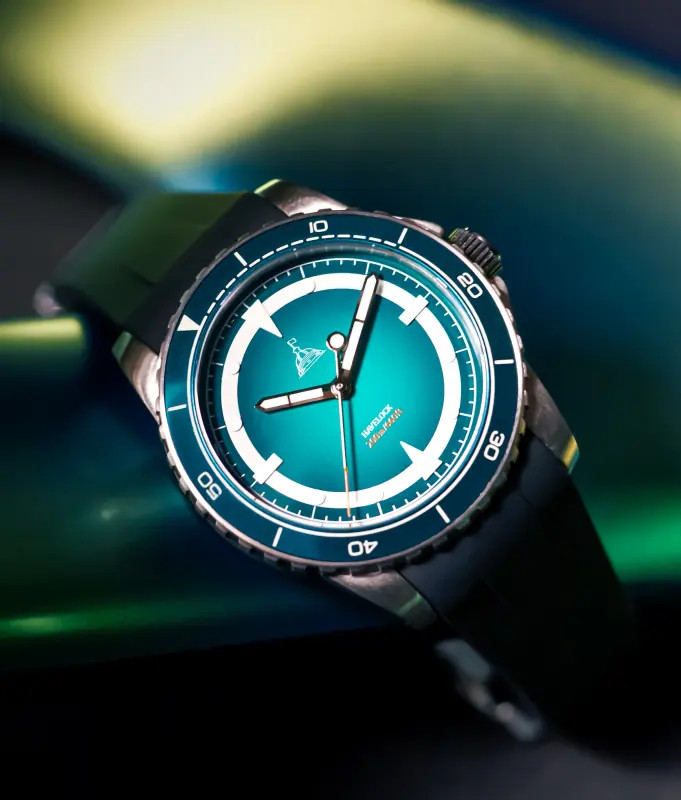
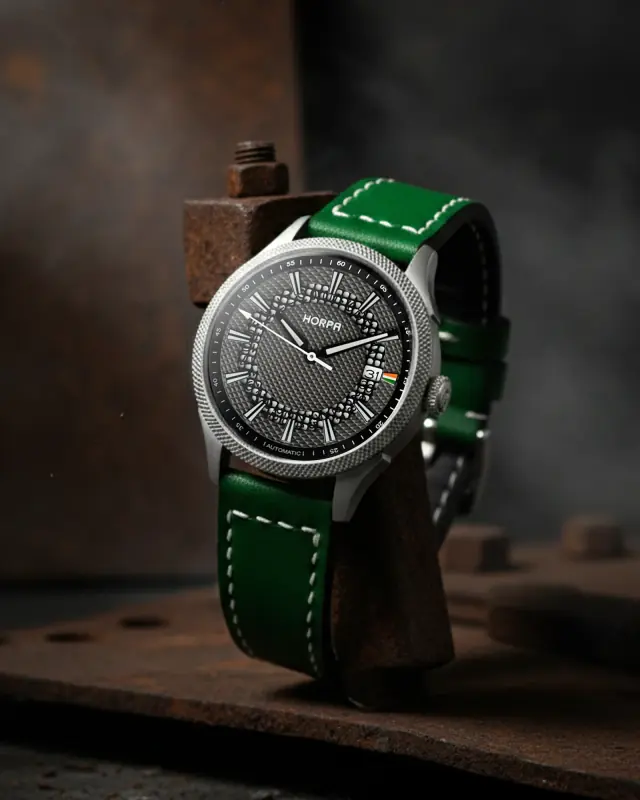
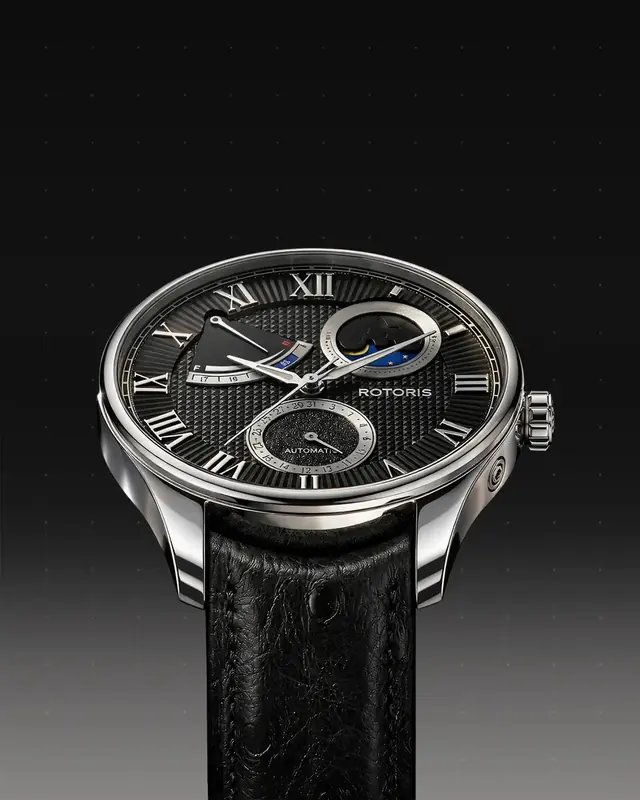
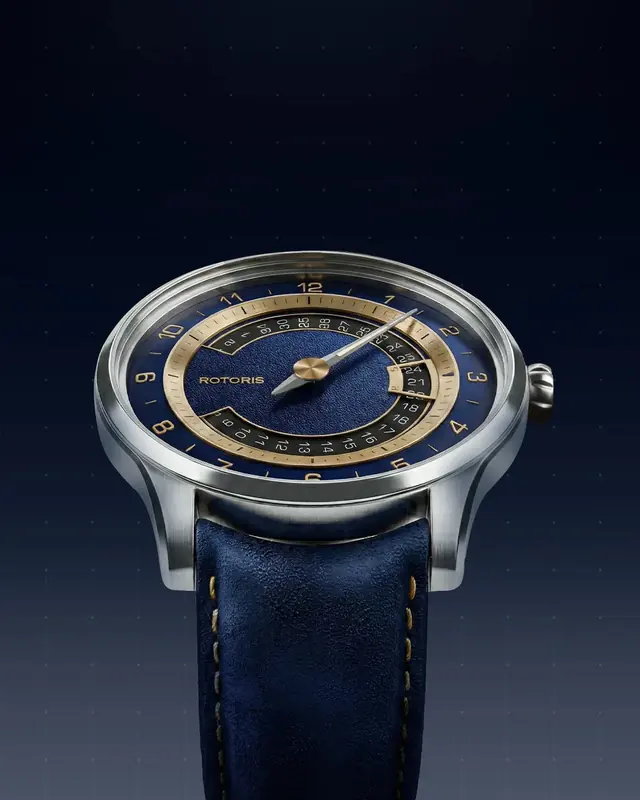
Most Indian micro-brand automatics in the ₹8,000–₹15,000 range use the Seiko NH35. It is hackable (the second hand stops when you pull the crown, allowing precise time-setting), hand-windable (you can wind it manually if it stops), and reliable enough that Seiko warranties it for years of daily wear. The Argos Olympus, DWC Havelock, and Horpa FORGE all use proven automatic movements — the same logic extends to Rotoris's far pricier Monarch, whose moonphase complication still sits on a conventional automatic base — because the founders understand that the movement is the foundation, and the design on top can be as ambitious as the story demands.
An automatic watch is the oldest form of wearable technology. No software updates. No charging cables. Just a mechanism that Abraham-Louis Perrelet conceived in 1770, refined by Rolex in 1931, and now ticking on wrists in Delhi, Bengaluru, and Jaipur — powered by nothing but the life you're living while you wear it.