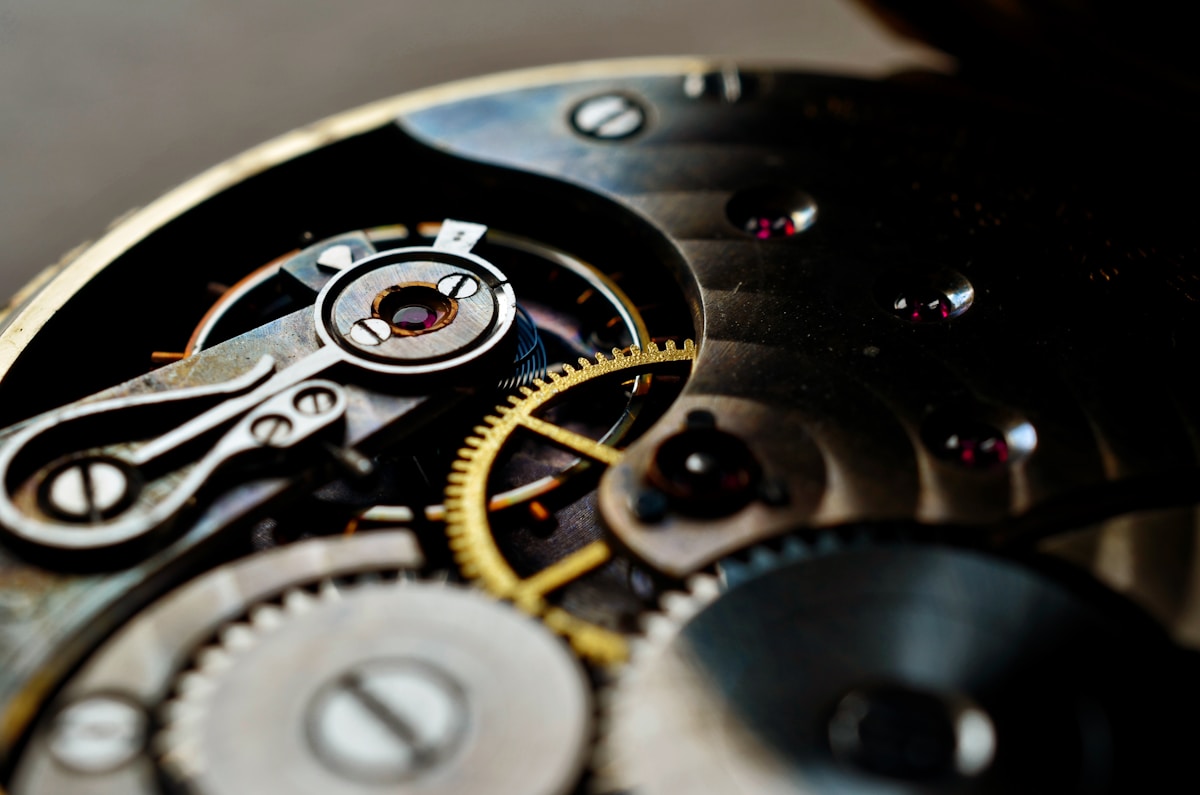
When a watch says '21 jewels,' it means 21 synthetic rubies are set into the movement at points of high friction. Not for beauty — for survival. Without them, metal pivots would wear against metal plates and destroy the movement within months. Here's what each jewel does, where it sits, and why the number matters.
The Problem Jewels Solve
A mechanical watch movement contains wheels and pinions spinning on metal pivots. Those pivots rotate inside holes in the movement's plates and bridges. Metal on metal, under constant pressure, for years. Without intervention, the pivots would score the holes, generate friction, and wear themselves into imprecision within months.
The solution, discovered in 1704 by Nicolas Fatio de Duillier, Peter Debaufre, and Jacob Debaufre: replace the metal bearing surfaces with jewels. Specifically, rubies — the second-hardest natural material after diamond. A steel pivot spinning inside a polished ruby bearing experiences dramatically less friction and virtually zero wear. The watch runs more accurately and lasts decades instead of months.
Why Rubies?
Natural rubies were used until the early 20th century, when Auguste Verneuil perfected a process for growing synthetic corundum (the mineral family that includes ruby and sapphire) in 1902. Synthetic rubies are chemically identical to natural ones — same crystal structure, same hardness (9 on the Mohs scale), same friction characteristics. They cost a fraction of a cent to produce.
Every jewel in a modern watch is synthetic. The "21 jewels" on your Seiko NH35 are 21 tiny synthetic rubies, each precisely drilled, polished, and pressed into the movement plates. They are not decorative. They are functional components with a specific job: reduce friction at every critical bearing point.
Where the Jewels Sit
A standard automatic movement like the NH35 uses its 24 jewels at these locations:
The balance wheel (4–6 jewels): The most critical location. The balance wheel oscillates thousands of times per hour, and its pivot bearings must be as frictionless as possible. Two jewels serve as bearings (one above, one below), and additional "cap jewels" sit on top to handle axial shock — the force transmitted when you bump your wrist against a doorframe.
The pallet fork (2 jewels): The two pallets on the lever escapement are jewels — they alternately engage and release the escape wheel's teeth. These jewels must be precisely shaped: their angle determines how efficiently energy passes from the mainspring to the balance wheel.
The escape wheel (2 jewels): Bearing jewels for the escape wheel's pivot, which rotates under constant impulse from the pallet fork.
The gear train (8–10 jewels): Each wheel in the train — third wheel, fourth wheel, centre wheel — sits on pivot bearings. Two jewels per wheel, top and bottom. Reducing friction here preserves the mainspring's energy for the escapement rather than losing it to heat.
The automatic module (2–4 jewels): The rotor bearing and the reduction gears that convert rotor spin into mainspring winding.
What the Numbers Mean
7 jewels: Minimum for a functional jewelled movement. Jewels only at the escapement. Common in vintage pin-lever watches.
17 jewels: The standard for a basic manual-wind movement. All critical bearing points jewelled. This was the benchmark for "fully jewelled" for most of the 20th century.
21 jewels: Standard for a modern automatic. The 17 base jewels plus additional jewels for the automatic winding mechanism. The Miyota 9015 uses 24 jewels.
24–28 jewels: Automatics with additional complications or higher jewel counts at key stress points.
30+ jewels: Complications like chronographs and perpetual calendars add jewels for each additional function's bearings. Above about 30, diminishing returns set in — additional jewels are serving marketing more than engineering.
The Jewel Arms Race
In the 1960s and 70s, some manufacturers inflated jewel counts beyond functional necessity — adding "non-functional" jewels to the automatic rotor or decorative positions to claim higher numbers on the dial. The practice was eventually curbed by industry standards. Today, jewel count is a useful but imperfect indicator of movement quality. 21–24 jewels in an automatic is the sweet spot: every jewel is doing real work.
What It Means for Your Watch
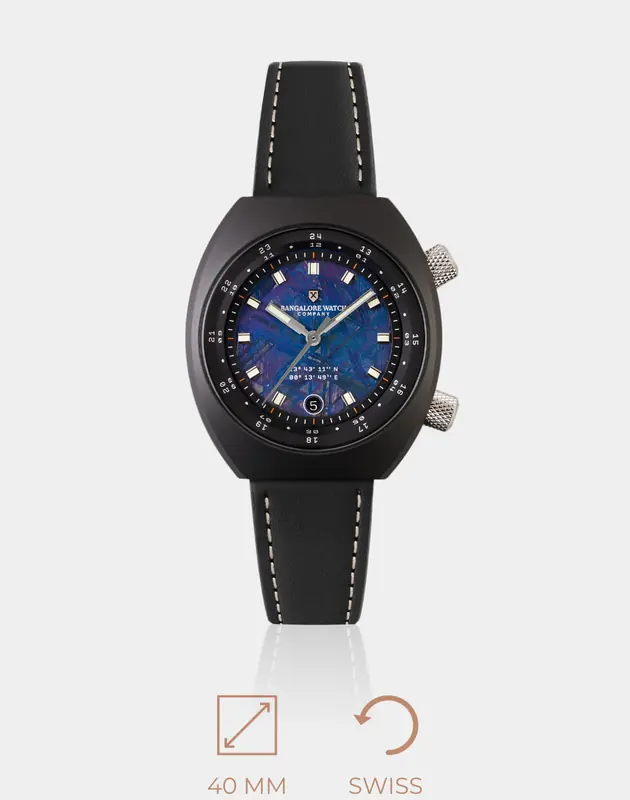
The 24 jewels inside a DWC Vayu or BWC Apogee Kármán aren't luxury. They're the reason the watch will still be accurate in twenty years. Each one is a tiny, precisely placed synthetic ruby ensuring that metal never grinds against metal at the points where accuracy is made or lost. When you see "21 jewels" or "24 jewels" on a dial or caseback, you're reading an engineering specification — the number of places where the watchmaker cared enough to eliminate friction.