A watch complication is any function beyond hours, minutes, and seconds. A date window is a complication. A chronograph is a complication. A moonphase, a power reserve indicator, a minute repeater — all complications. The word sounds like a problem. In watchmaking, it's the opposite: it means the watchmaker added something difficult and got it right.
The Word
"Complication" in watchmaking means the opposite of what it means everywhere else. It's not a problem — it's an achievement. A complication is any function a watch performs beyond displaying hours, minutes, and seconds. Every additional function requires additional parts, additional engineering, and additional skill to execute. The more complications, the more the watchmaker is telling you they can do.
Simple Complications
Date: The most common complication. A disc beneath the dial rotates once per day, showing the current date through a window — usually at 3 o'clock. Most date displays require manual correction at the end of months with fewer than 31 days. A "quick-set date" lets you advance the date independently by pulling the crown to a second position.
Day-Date: Adds the day of the week alongside the date. Two discs instead of one. The Seiko NH36, used in some Indian micro-brand watches, adds this function to the NH35's base architecture.
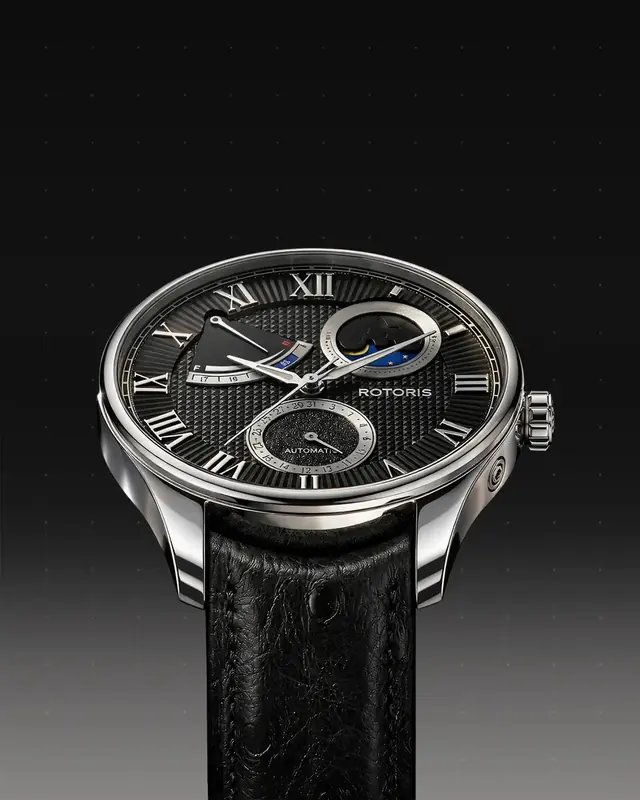
Power Reserve Indicator: A display — usually a subdial or arc — showing how much energy remains in the mainspring. The Argos Olympus features India's first power reserve indicator from an independent brand. It tells you when the watch needs wearing or winding. Practically useful, mechanically interesting.
Chronograph
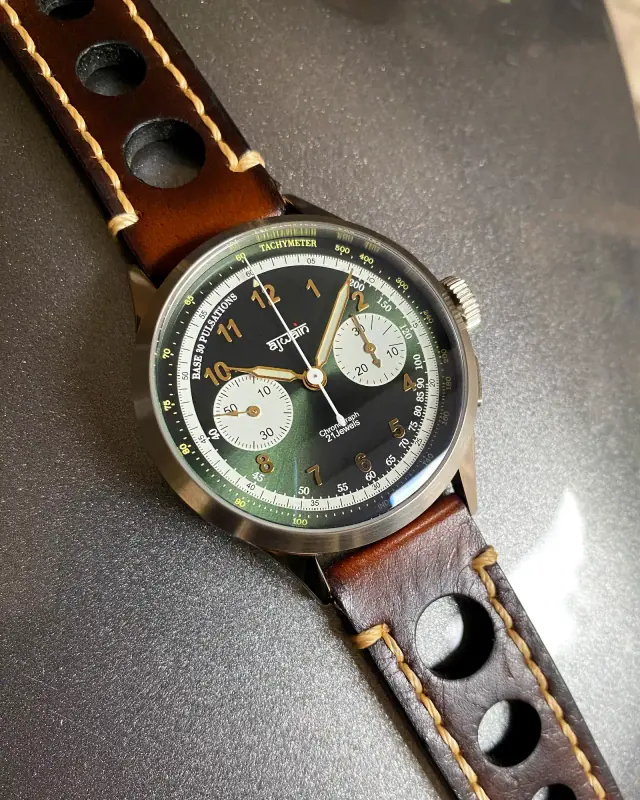
A chronograph is a stopwatch built into a watch. Push a button to start timing, push again to stop, push a third to reset. The mechanism requires a clutch system to engage and disengage the chronograph hand from the movement, plus a column wheel or cam to control the start-stop-reset sequence.
Mechanical chronographs are among the most complex complications — hundreds of additional parts operating under the pressure of a pushbutton. The Ajwain Sholavaram III is India's first mechanical chronograph from an independent brand. Meca-quartz chronographs — like the Seiko VK64 used in Kala Watch Co.'s Warli editions — use a quartz base with a mechanical module for the chronograph function, giving a mechanical sweep to the chrono hand at a fraction of the cost.
Moonphase
A moonphase complication tracks the 29.5-day lunar cycle, displaying the current phase of the moon through a shaped aperture on the dial. A disc painted with two moons rotates beneath the aperture, driven by a 59-tooth gear that advances one tooth per day. Two full cycles — 59 days — approximates two lunar months.
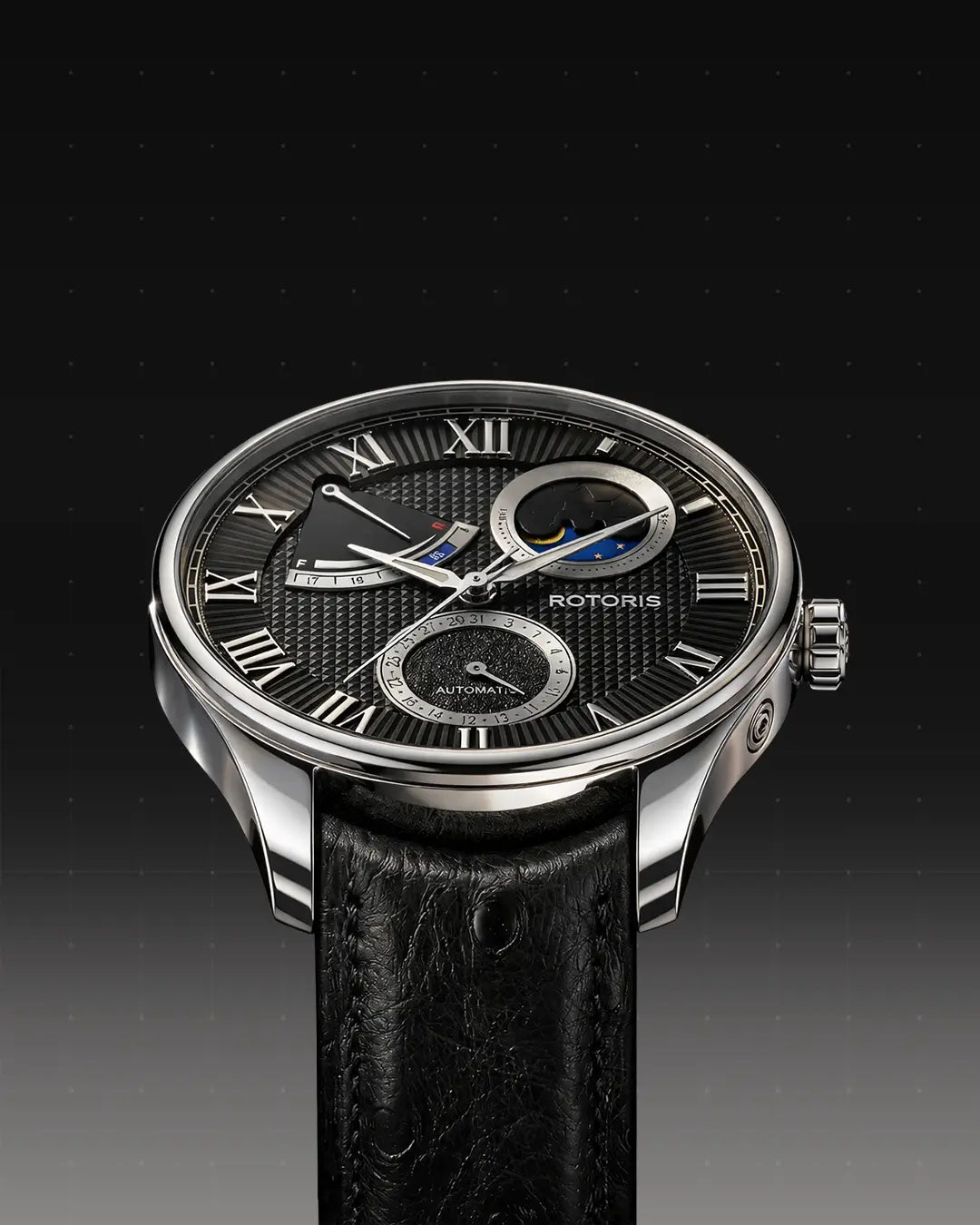
The Rotoris Monarch features a moonphase — a complication that requires genuine movement engineering to execute properly. Simple moonphase displays accumulate about one day of error every 2.5 years. High-precision versions can run for over a century before needing correction.
World Time and GMT
GMT/Dual Time: Displays a second time zone using an additional hand that completes one rotation every 24 hours. Named for Greenwich Mean Time, though the function works for any two zones. Essential for travellers, international callers, or anyone with family across borders.
World Time: Displays all 24 time zones simultaneously using a rotating city disc and a 24-hour ring. Invented by Louis Cottier in the 1930s. Rotating the bezel or crown sets your local city, and every other zone aligns automatically.
Advanced Complications
Tourbillon: A rotating cage that holds the entire escapement and balance wheel, completing one revolution per minute. Invented by Abraham-Louis Breguet in 1801 to counteract gravity's effect on accuracy when a pocket watch sat in one position. In wristwatches (which constantly change position on the wrist), the practical benefit is minimal — but the engineering is extraordinary. The tourbillon remains the most celebrated complication in watchmaking.
Minute Repeater: Chimes the time audibly when a slide lever is activated. Hammers strike tuned gongs — one for hours, one for quarter-hours, one for minutes. Arguably the most difficult complication to execute well: it requires acoustic engineering alongside mechanical engineering. A great repeater sounds like a tiny bell choir inside a watch case.
Perpetual Calendar: Tracks the date, day, month, and leap year cycle without manual correction until 2100 (when the Gregorian calendar skips a leap year). The movement "knows" which months have 28, 30, or 31 days. Hundreds of additional parts. Typically found only in watches costing tens of thousands.
Single Hand
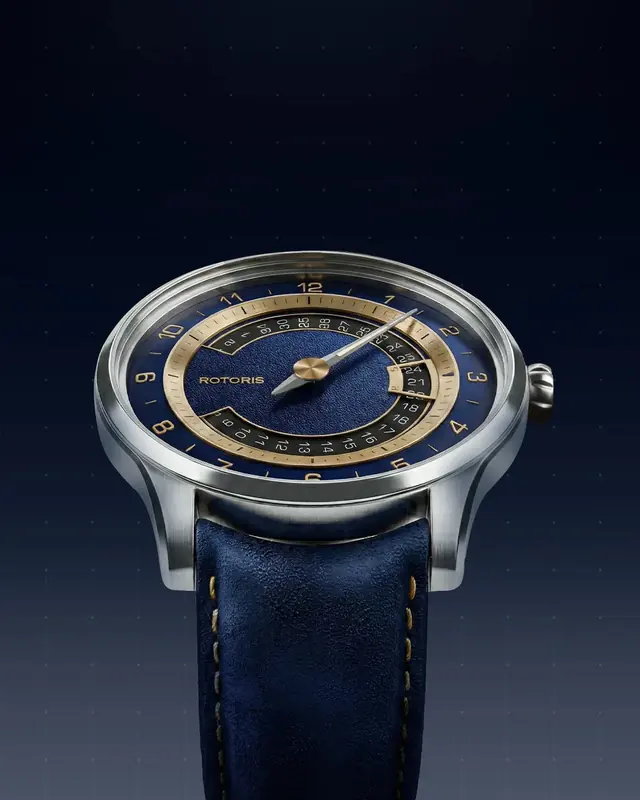
A complication by subtraction. The Rotoris Arvion uses a single hand to display time — one revolution every twelve hours. You read the time approximately, which is the point: it forces a different relationship with precision. The single-hand watch doesn't care about your exact minute. It asks you to care less too. In an era of atomic-precision smartphones, that's a statement.
Why Complications Matter
A complication is a watchmaker saying: "I can do more." Each one adds dozens to hundreds of parts, each of which must work in concert with every other part. The fact that Indian brands are now producing chronographs, moonphases, and power reserve indicators is a technical milestone — it means the skills, the supply chains, and the ambition exist to move beyond time-only watches into the full vocabulary of horology.