IST 1947 is a Mumbai watch brand founded by Karan Vaidya and named for 1 September 1947, the day India set its own time. It launches with three collections: Arka dress watches with a Konark Wheel small seconds (₹9,999), Vanya field watches for Kaziranga, Gir, Ranthambore and Jawai (₹9,999), and Vijay, five 100-piece automatics for India's five World Cup wins (₹19,470). Here is what each one is, what's inside, and when they go on sale.
On 1 September 1947, two weeks after Independence, India gave up the patchwork of Bombay, Calcutta and railway time and adopted a single clock: Indian Standard Time, five and a half hours ahead of Greenwich. IST 1947, a new Mumbai watch brand, takes its name from that date, and its whole pitch fits in the joke on its own website: IST — In Some Time. The unofficial full form.
The idea behind it is more serious. Most of the watches sold to Indian buyers, founder Karan Vaidya writes, still ask us to admire someone else's world: sailing, motorsport, dive watches for a country that mostly doesn't dive, GMT watches that don't naturally account for a half-hour time zone. IST 1947 is his attempt at the opposite: watches that start from how India actually lives with time.
Who is behind IST 1947?
Karan Vaidya grew up inside the watch trade. His father was part of the first wave that brought international watch brands into India as the economy opened up, and Karan studied at Columbia University before returning to work in the family's luxury watch and jewellery business. The brand is operated by KNV Ventures Pvt Ltd, is based in Kala Ghoda in Mumbai's Fort district, and names Rose The Watch Bär, at The House of Rose in Ballard Estate, as its authorised service centre.
The launch was announced on 15 September 2026 by his brother Arjun Vaidya, who built Dr. Vaidya's into one of India's biggest direct-to-consumer Ayurveda brands, sold it, and is now a consumer investor. His Instagram reel describes a family that spent 30 years "importing, distributing and putting other people's names on other people's dials," and a younger brother who decided to change that. Friends-and-family access opened the same day, ahead of public launches staggered across the next six weeks.
The three collections
| Collection | What it is | Movement | Price | Launches |
|---|---|---|---|---|
| Arka | 38mm dress watch, Konark Wheel small seconds, 5 dials | Miyota 1L45 quartz | ₹9,999 | 30 Sep 2026 |
| Vanya | 40mm field watch, one per national park, 4 dials | Miyota 2115 quartz | ₹9,999 | 15 Oct 2026 |
| Vijay | 43mm cricket automatic, one per World Cup win, 100 pieces each | Miyota 82S7 automatic | ₹19,470 | 30 Oct 2026 |
Every IST 1947 watch has a sapphire crystal, is individually numbered and comes with a two-year digital warranty. None of them are pretending to be Swiss.
Arka: a sundial on the dial
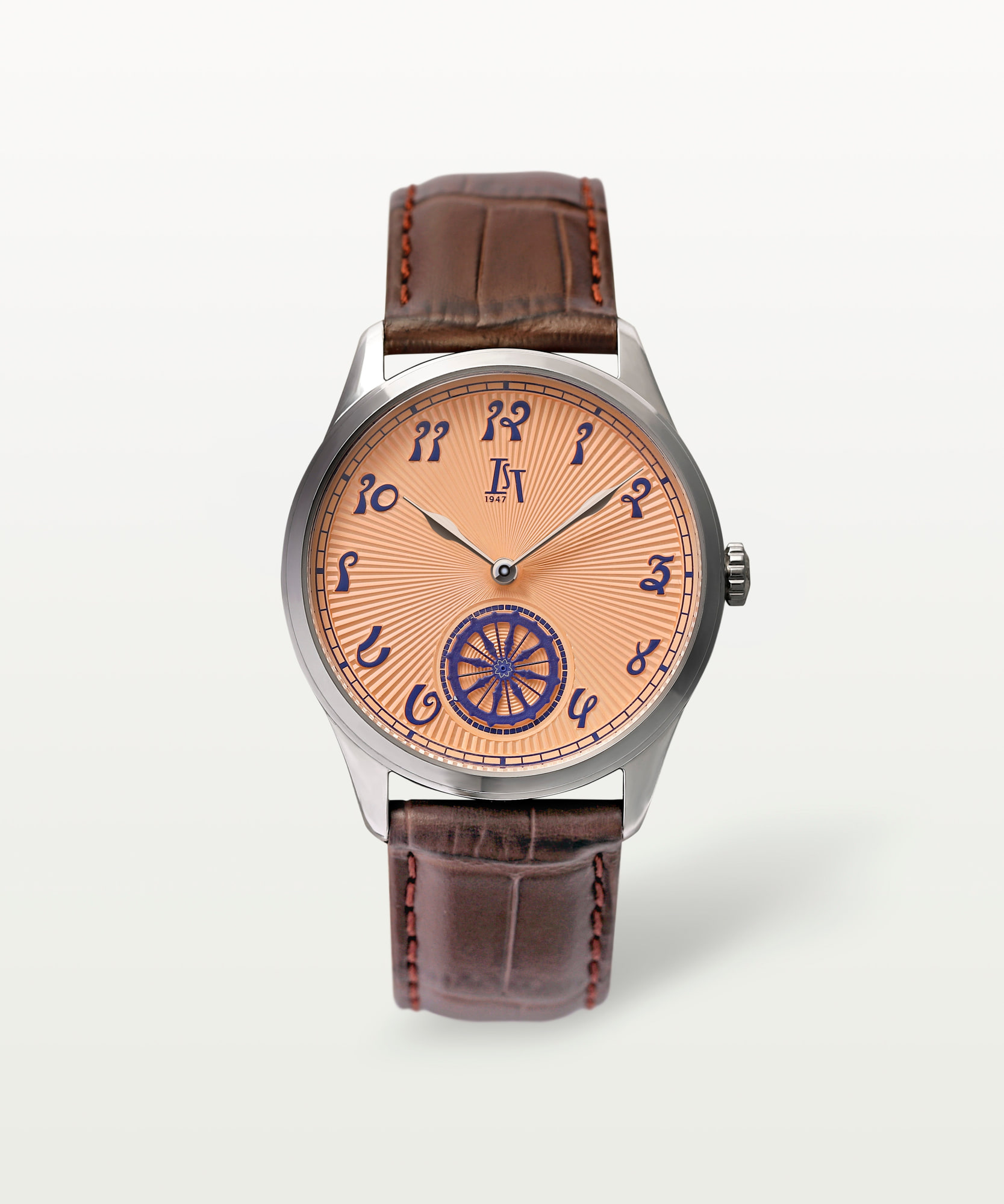
Arka (Sanskrit for the sun) is the collection most people will buy first. The reference is the 13th-century Sun Temple at Konark in Odisha, built as a giant stone chariot whose carved wheels double as sundials. IST 1947 turns one of those wheels into a rotating small seconds at 6 o'clock and engraves another on the caseback. The numerals are the brand's own "Bregnagari" script, a custom face drawn from Devanagari rather than a plain Hindi font dropped onto a dial.
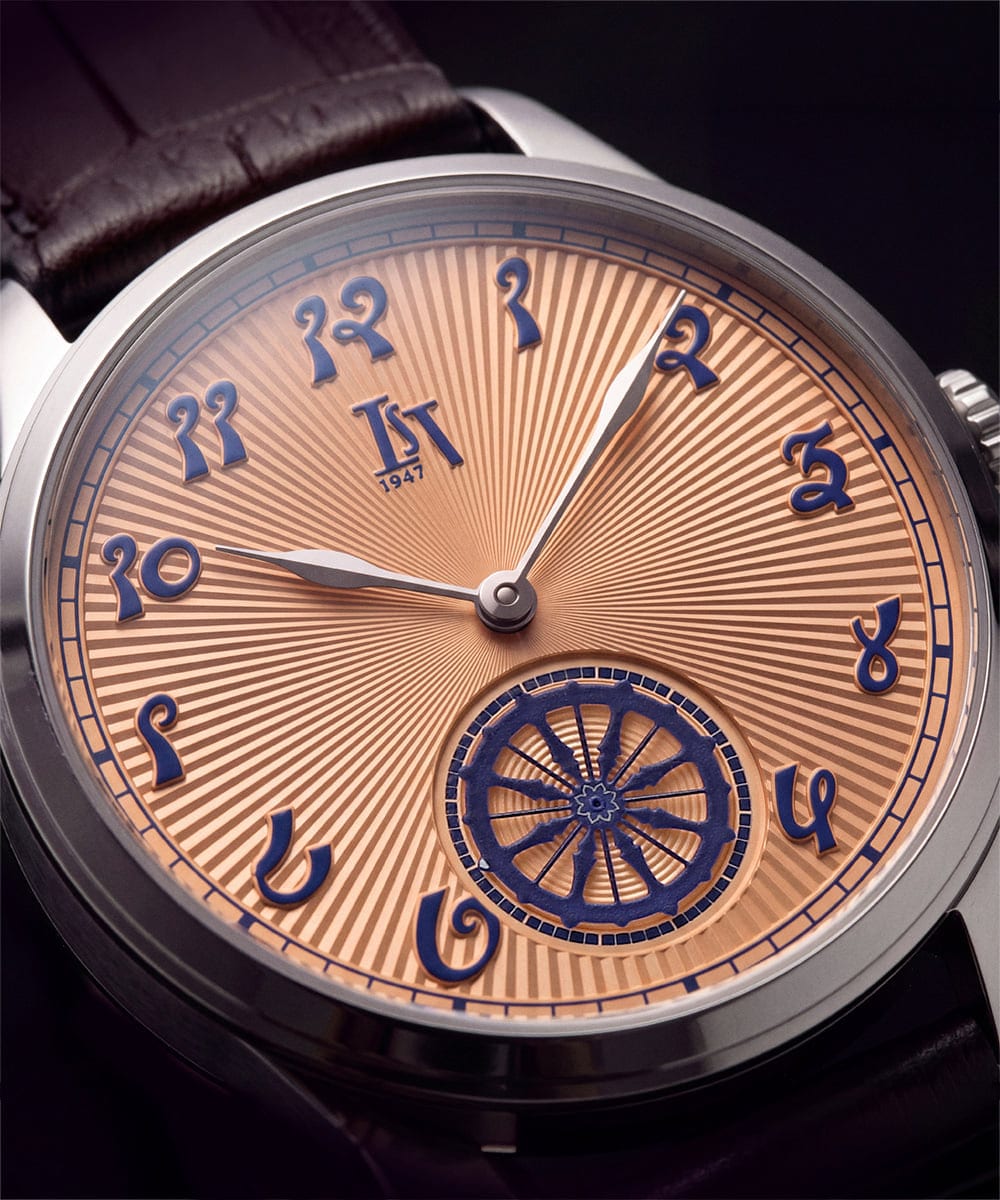
There are five colours, all in a 38mm steel case under domed sapphire, water resistant to 100m, on alligator-embossed calf leather: Arka Cloud Nine (powder blue), Arka Golden Hour (salmon), After Hours (navy), White Noise (ivory) and Rain Check (monsoon green with copper numerals). At 38mm it is properly dress-sized, which is rarer than it should be among Indian brands.
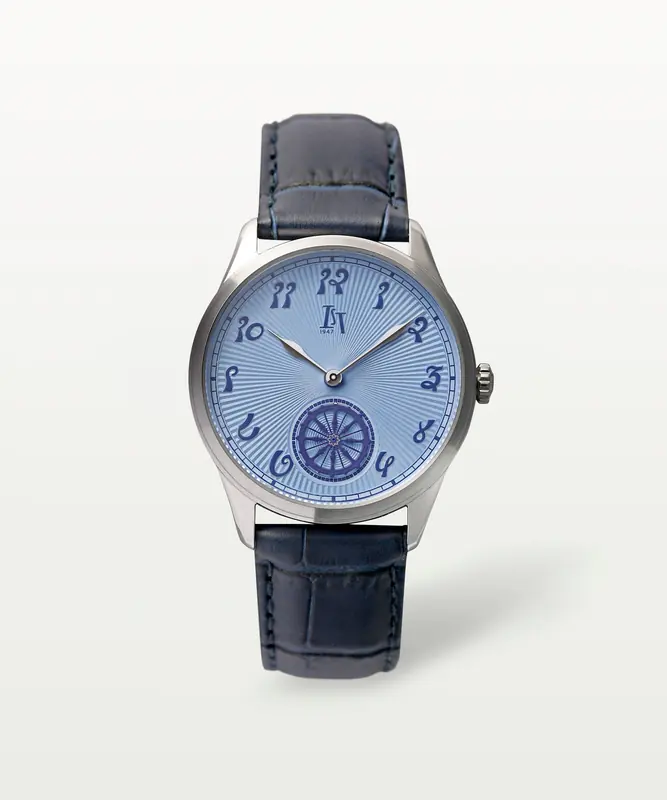
IST 1947
Arka Cloud Nine
₹9,999
Our pick is Golden Hour. A sun-coloured dial carrying the wheel of India's most famous sun temple is the kind of idea that seems obvious only after someone has done it.
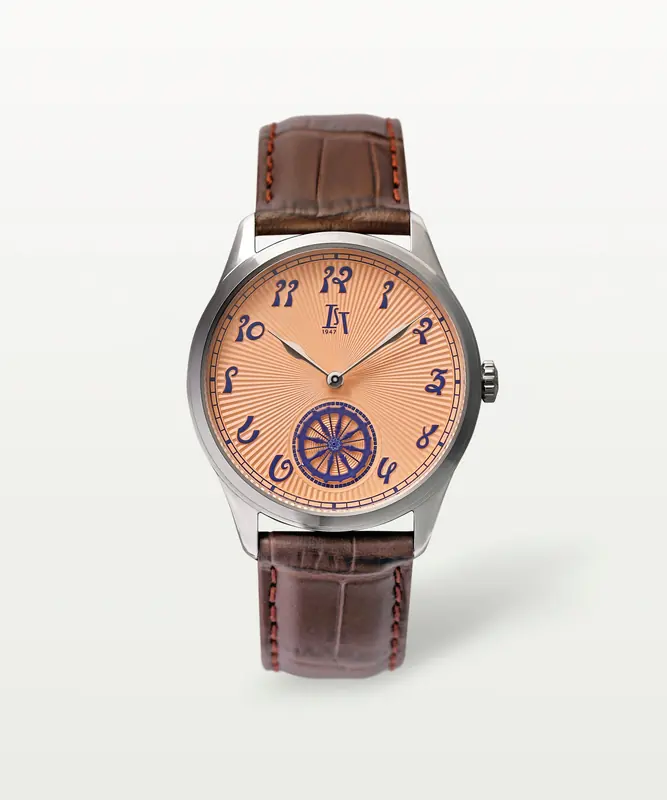
IST 1947
Arka Golden Hour
₹9,999
Vanya: four parks, four scripts
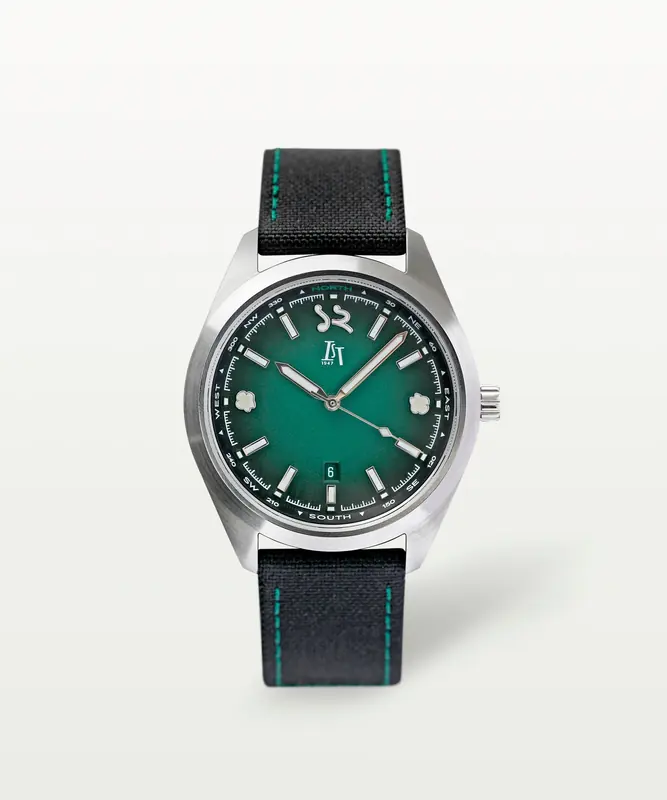
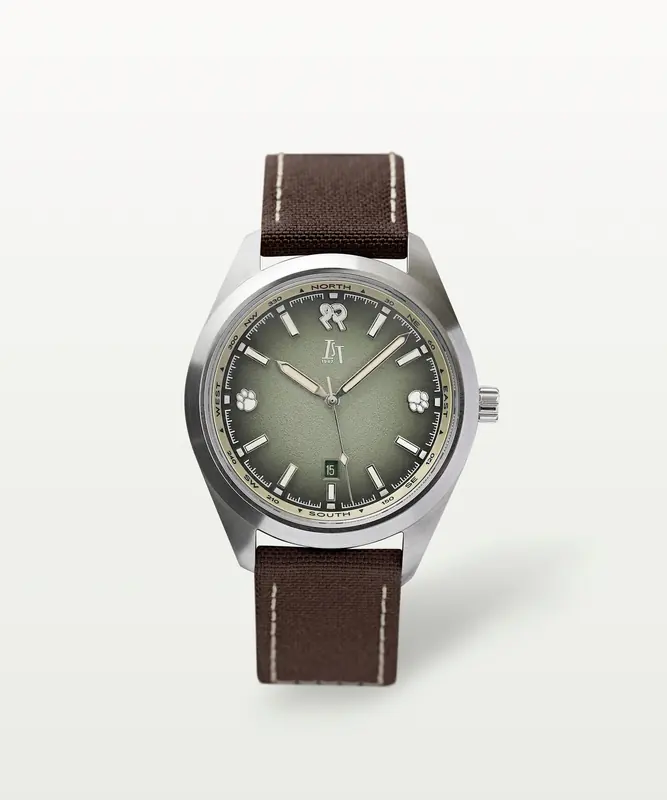
Vanya (of the forest) is a 40mm field watch built around four places and the animal each is known for. The 3 and 9 markers are replaced by luminous paw or hoof prints, the 12 is written in the script of that park's state, and the caseback carries an engraved state map with the park's exact coordinates.
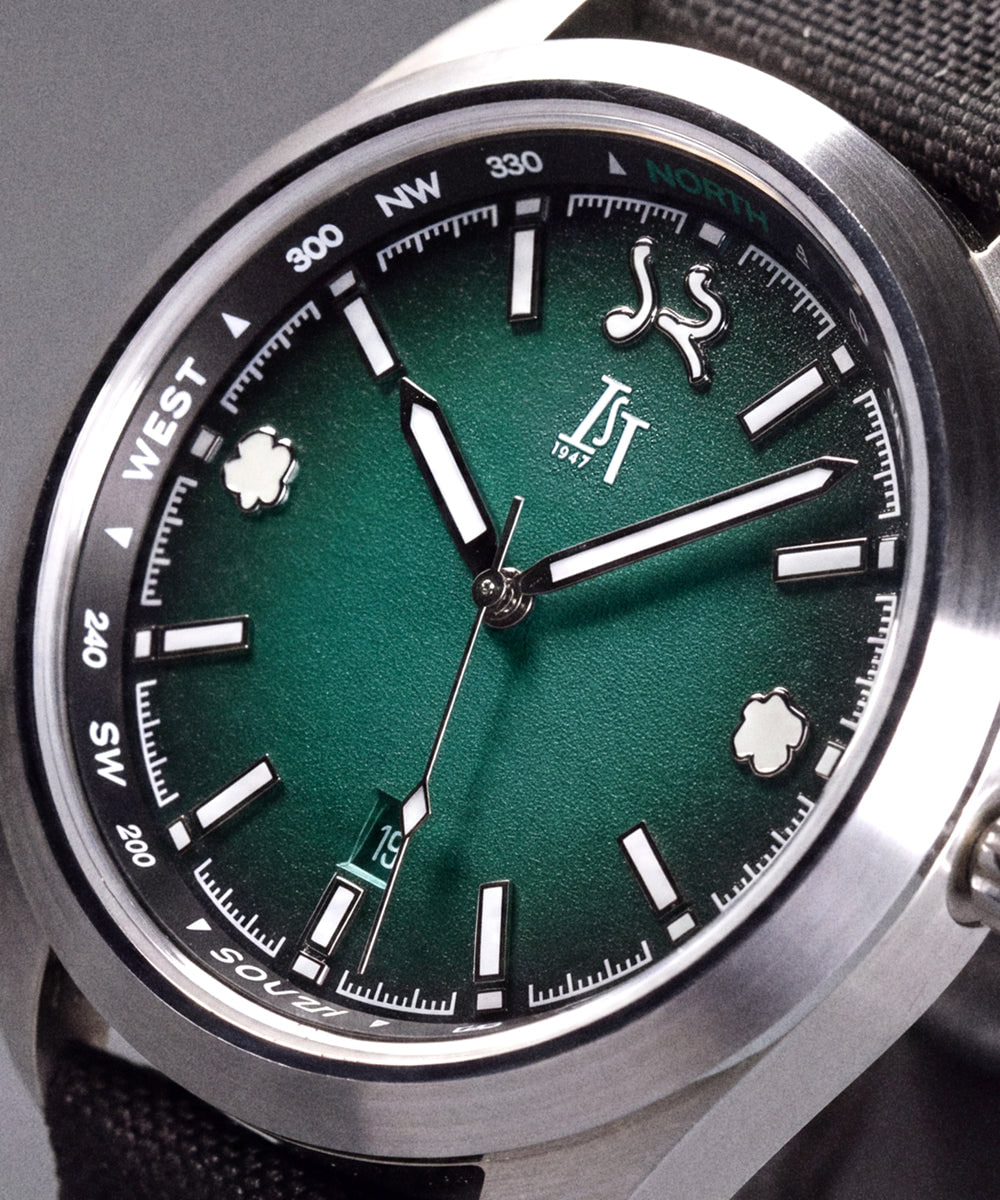
- Vanya Kaziranga Gorh: one-horned rhino, Assam, Assamese numeral, teal-green fumé dial
- Vanya Ranthambore Bagh: tiger, Rajasthan, Devanagari numeral, olive fumé dial
- Gir Sinh: Asiatic lion, Gujarat, Gujarati numeral, brown fumé dial
- Jawai Tendua: leopard, Rajasthan, Devanagari numeral, grey fumé dial
The spec is honest tool-watch spec: 316L steel, sapphire, Japanese C3 lume, a date, 100m of water resistance, a Miyota 2115 quartz and a hook-and-loop nylon strap. Kaziranga Gorh is the most striking of the four, and a rare Indian watch that puts the Northeast, and its script, on a dial.
IST 1947
Vanya Kaziranga Gorh
₹9,999
IST 1947
Vanya Ranthambore Bagh
₹9,999
Vijay: five nights Indian cricket stopped
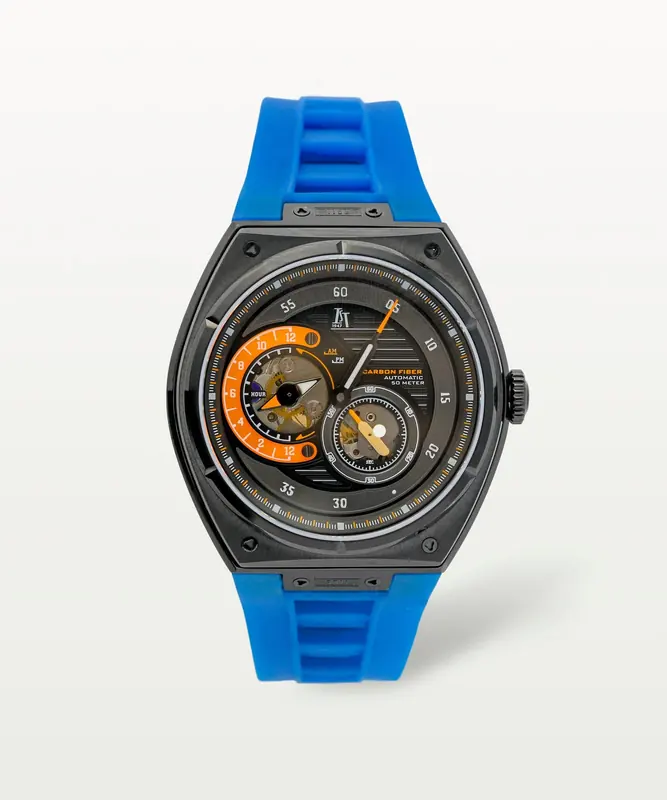
Vijay (victory) is the flagship: five automatics for India's five World Cup titles, each limited to 100 pieces and priced at ₹19,470, a price that is clearly a nod to 1947. They share a 43mm PVD-coated steel tonneau case, a carbon-fibre dial, a Miyota 82S7 automatic with 48 hours of power reserve, an AM-PM indicator at 9, a bat-and-ball small seconds at 5, and a crown textured like a leather season ball. The mineral-glass caseback is engraved with the date and venue of the final.
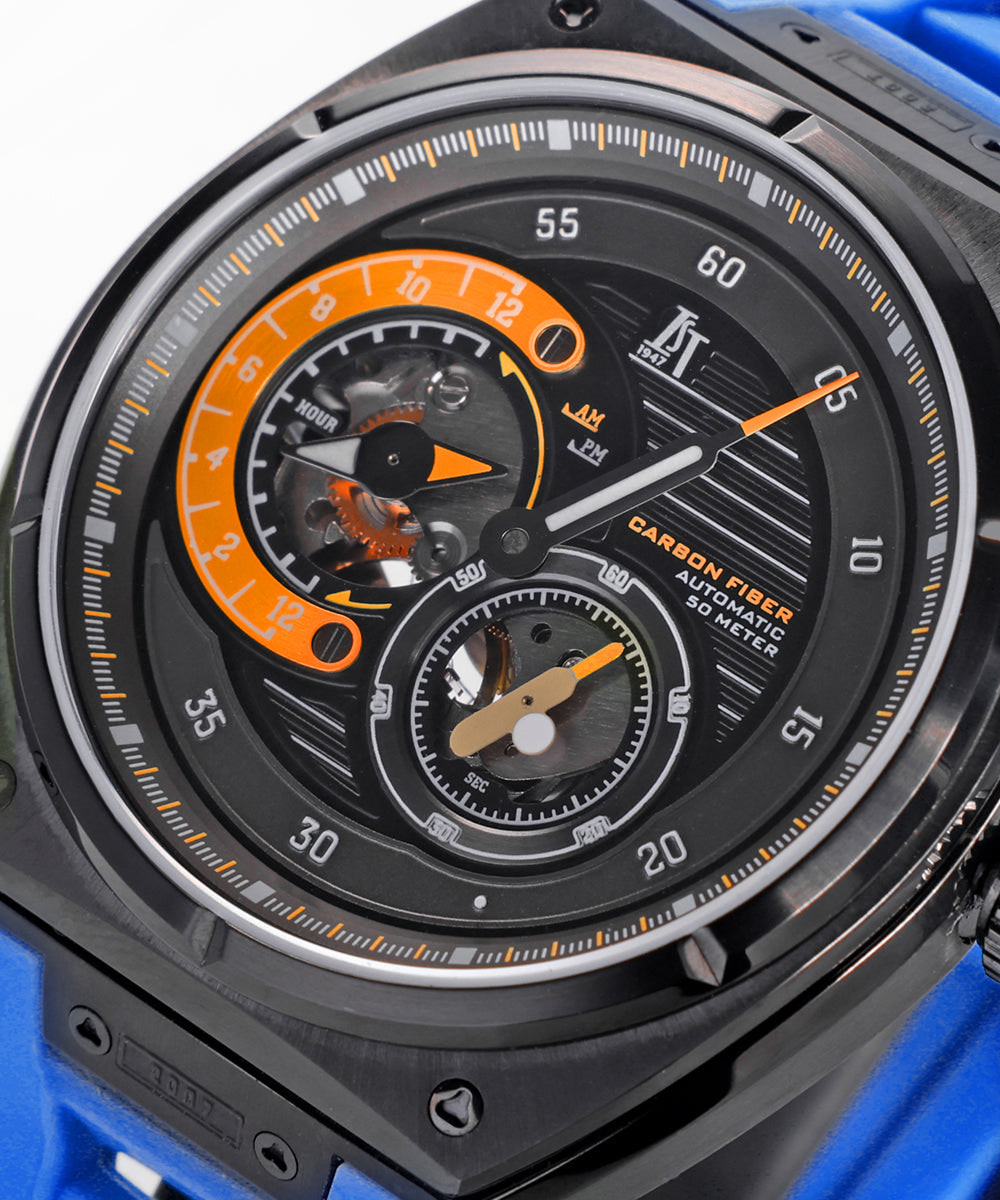
What changes between them is colour, taken from each era's kit: Vijay 1983 in navy and white for Lord's, 2007 in light blue and yellow for the first T20 World Cup, Vijay 2011 in blue and orange for the Wankhede, 2024 with a bright orange strap for Barbados, and 2026 in navy and sky blue for the title defence.
IST 1947
Vijay 2011
₹19,470 · limited to 100
For context, the other serious Indian cricket watch is Bangalore Watch Company's Cover Drive, a restrained cream-dialled automatic at well over ₹1 lakh. Vijay is the opposite in almost every way: loud, sporty, tied to specific matches, and under ₹20,000. The 1983 is the one to buy if you want it to look good in ten years.
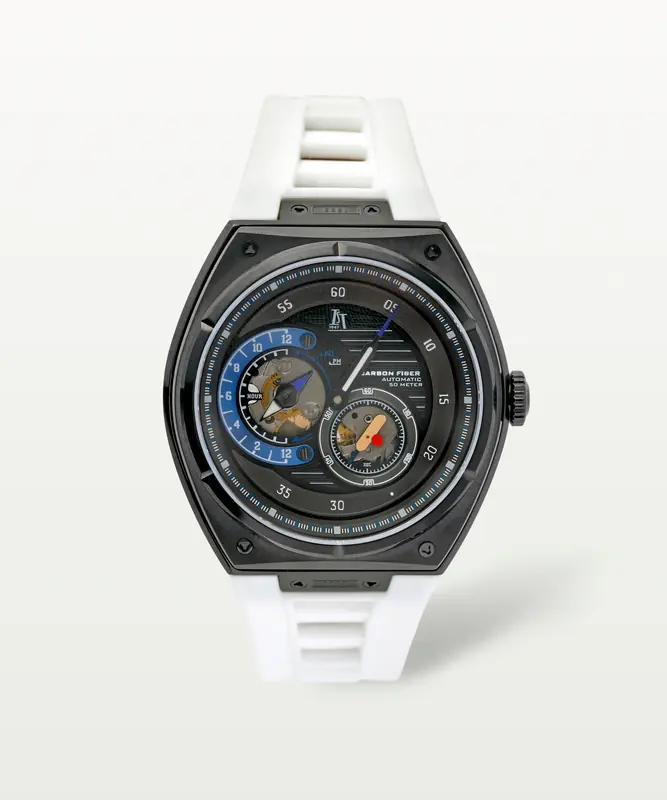
IST 1947
Vijay 1983
₹19,470 · limited to 100
Is IST 1947 worth buying?
At ₹9,999, Arka and Vanya are priced right in the busiest part of the Indian micro-brand market, against brands like Delhi Watch Company and Cypher. What they offer that most rivals don't is sapphire on every model and ideas that are specific rather than generic: a particular temple wheel, a particular park, a particular script. The trade-off is that both are quartz. If you want a mechanical movement, Vijay is the only option, and it is a big 43mm sports watch rather than an everyday one.
The bigger question is whether a brand from a watch-retail family can feel independent. On this evidence, yes. None of these watches looks like a Swiss knock-off, and the brand has taken real design risks. Buy Arka for a dress watch with a story, Vanya for a beater that means something, and Vijay if you remember where you were for one of those five finals.
Frequently asked questions
Who founded IST 1947?
IST 1947 was founded by Karan Vaidya in Mumbai in 2026. His family has worked in luxury watch import, distribution and retail for around 30 years. His brother, Dr. Vaidya's founder Arjun Vaidya, announced the launch on 15 September 2026.
Why is the brand called IST 1947?
It is named after 1 September 1947, the date independent India officially adopted Indian Standard Time as its single national time zone.
How much do IST 1947 watches cost?
The Arka and Vanya collections are ₹9,999 each. The five Vijay cricket watches are ₹19,470 each and limited to 100 pieces per model.
When do IST 1947 watches go on sale?
Arka launches on 30 September 2026, Vanya on 15 October 2026 and Vijay on 30 October 2026, according to ist1947.com. Friends-and-family access opened on 15 September.
What movements do IST 1947 watches use?
Arka uses a Miyota 1L45 quartz, Vanya a Miyota 2115 quartz, and Vijay a Miyota 82S7 automatic with 48 hours of power reserve. All three are Japanese Citizen-group movements.