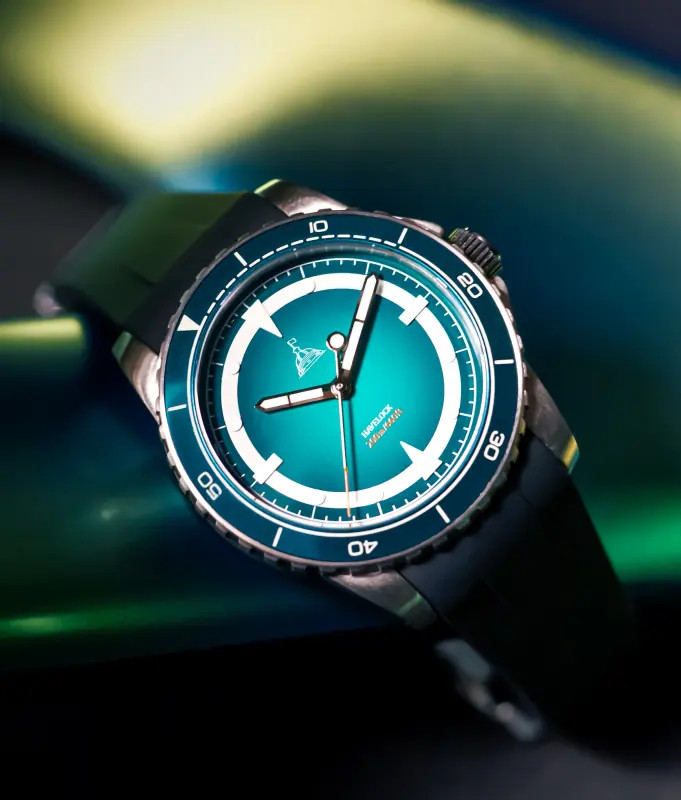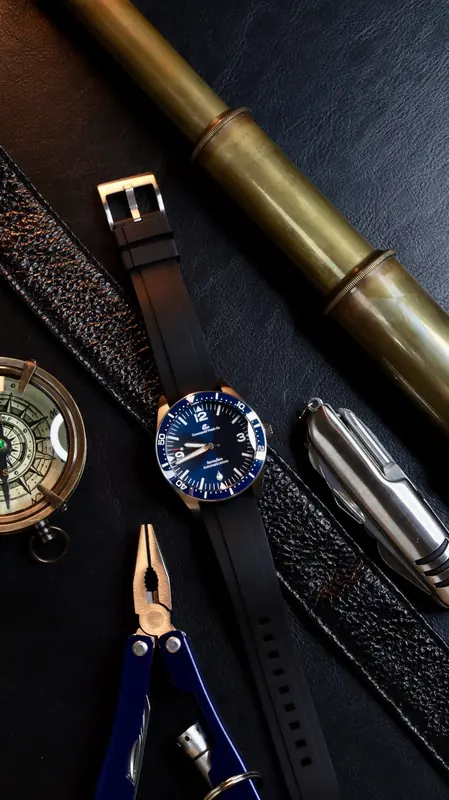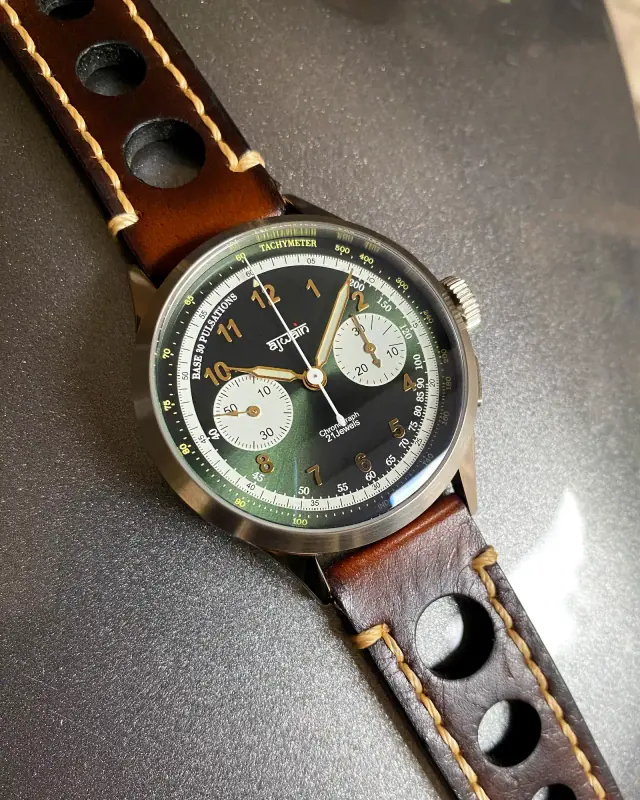
SuperLuminova is the pigment behind almost every glowing watch dial made today — a non-radioactive photoluminescent compound that charges under light and releases it slowly in the dark. Here's how it actually works, what the grade codes (C1, C3, BGW9) mean, and which Indian watches use it well.
What lume actually is
SuperLuminova is a brand name — owned by the Swiss firm RC Tritec — for a family of photoluminescent pigments used on watch hands, markers and bezels. It's a strontium aluminate compound: expose it to light and its molecules absorb and store energy, then release that energy slowly as visible light once the surrounding light drops. No radioactivity is involved, unlike the radium- and tritium-based lume used on vintage watches through the mid-20th century, which genuinely was radioactive and is now regulated or banned in new production.
The glow isn't a fixed brightness — it's a decay curve. A dial charged under strong daylight or a torch will glow brightest in the first 30–60 minutes after the lights go out, then fade gradually over several hours. Higher-grade lume compounds and thicker application both extend how long that glow stays legible.
The grade codes: C1, C3, BGW9
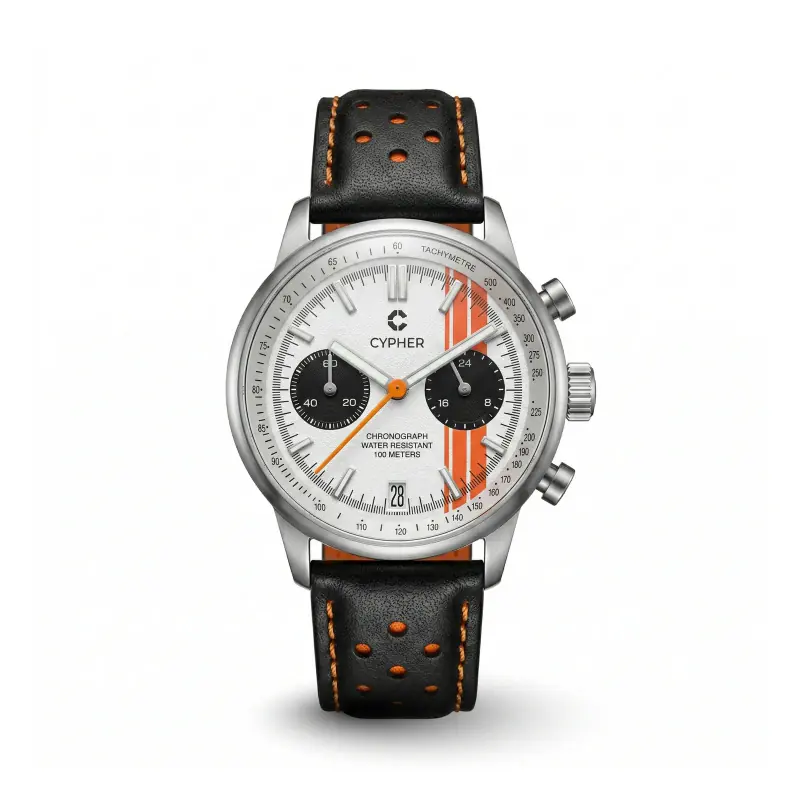
SuperLuminova ships in numbered and lettered grades that indicate colour and intensity under UV charging, not necessarily how bright it glows in the dark. C1 is a warm, vintage-toned off-white commonly used for a retro or "faux-patina" look. C3 is one of the brightest standard grades, a common choice for tool and dive watches where maximum low-light legibility matters. BGW9 ("Blue Grey White 9") glows pure white under charging and blue-white in the dark — the grade most associated with modern Swiss dive watches. Brands publish the exact grade they use as a legitimate spec, the same way they'd publish a movement caliber — which is why Cypher Watches naming "C1 SuperLuminova" on its Paddock '74 listing, rather than the vaguer "luminous", is a real transparency signal rather than marketing filler.
Why it matters more on a dive watch
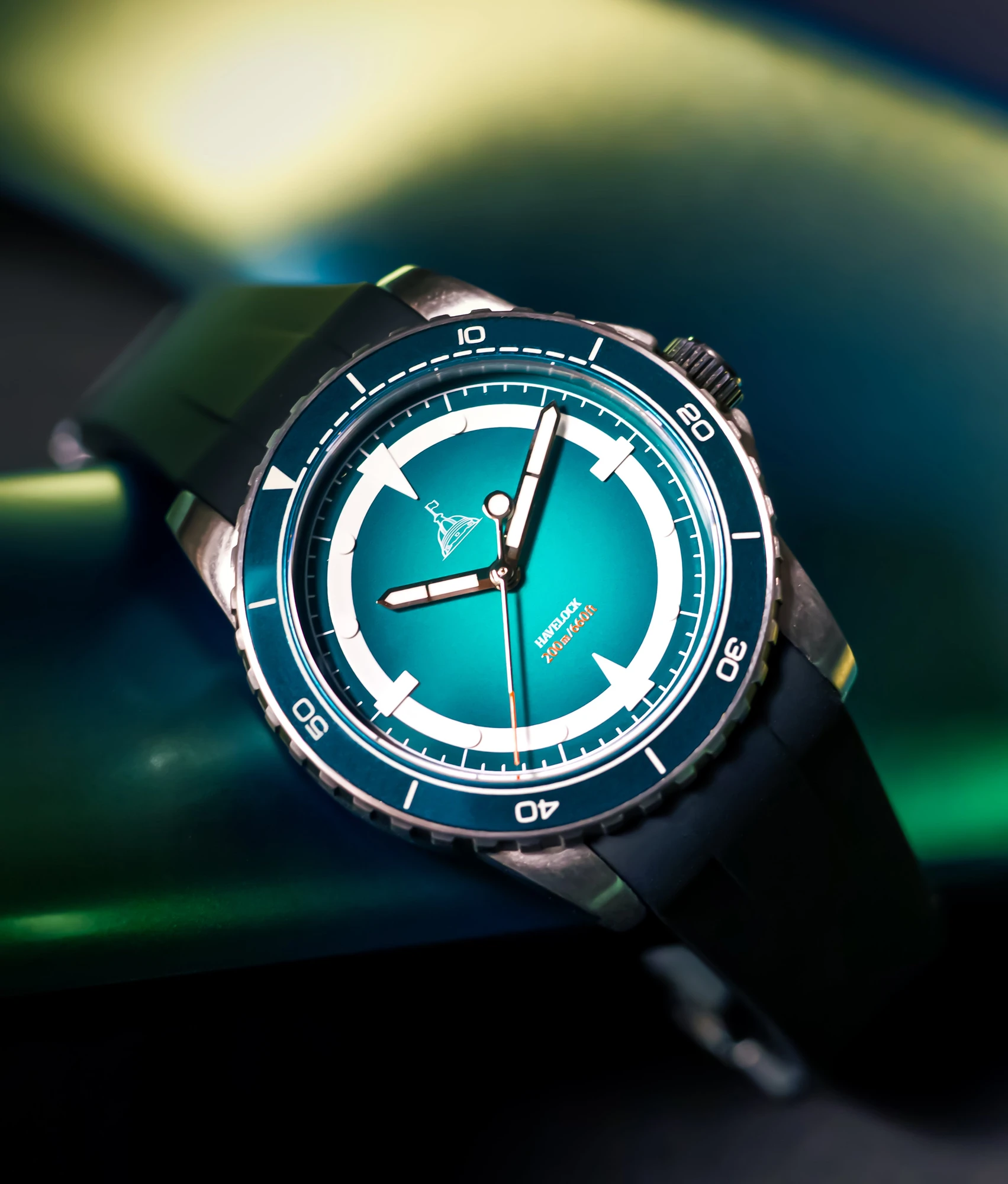
Legibility in the dark isn't cosmetic on a dive watch — ISO 6425, the international dive-watch standard, requires the running-time indication to be visible in total darkness. That's why divers get the heaviest lume application: thick lume plots on the hands and markers, and often a lumed pip on the bezel's zero marker, so a diver can read elapsed time without a torch. Delhi Watch Company's Havelock Blue and Coromandel's Samudhra — both genuine 200m divers — apply lume for exactly this reason, not just aesthetics.
What to check before buying
Listings that simply say "luminous hands" without naming a grade usually mean a cheaper, unbranded photoluminescent pigment — still functional, but typically dimmer and shorter-lasting than a named SuperLuminova grade. A brand that names its lume grade (C1, C3, BGW9, or similar) is telling you something real about how the watch will perform at night, not just how it looks on a product photo.
Frequently asked questions
Is SuperLuminova radioactive?
No. It's a strontium aluminate photoluminescent pigment that charges under light and glows in the dark — no radioactive materials are involved. This is different from the radium and tritium lume used on vintage watches before the mid-20th century.
What's the brightest SuperLuminova grade?
C3 and BGW9 are generally considered the brightest standard grades. C1 is chosen more for its warm, vintage colour tone than for maximum brightness.
How long does watch lume glow?
Glow is brightest in the first 30–60 minutes after charging and fades gradually over several hours, depending on the grade and how much light it absorbed beforehand.