A chronograph is a stopwatch function built into a watch — start, stop and reset a timer using pushers, read it on subdials. Here's how mechanical, meca-quartz and quartz chronographs differ, and which Indian watches use each kind.
The basic idea
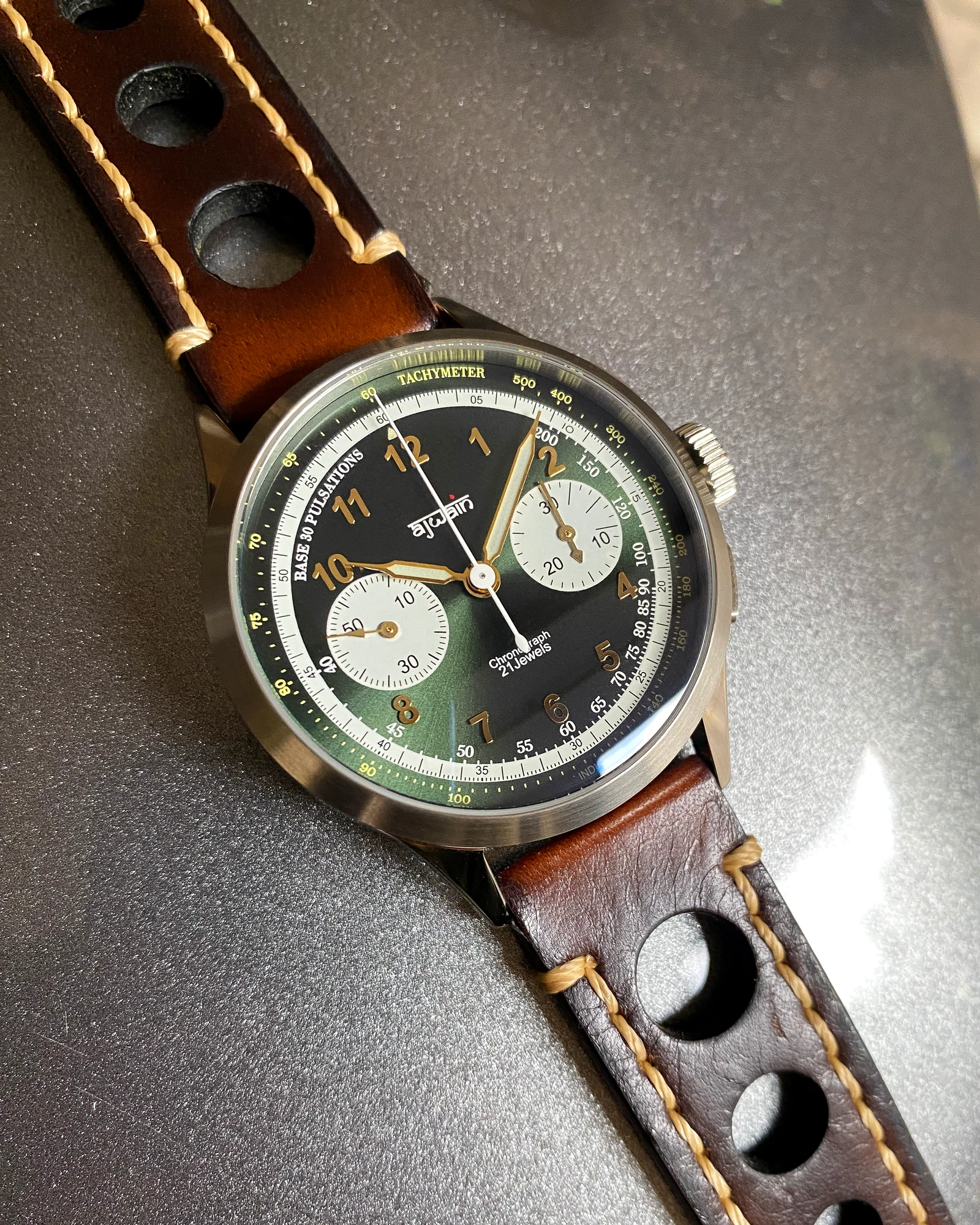
A chronograph is a stopwatch built into a watch. Press one pusher to start timing, press it again to stop, press a second pusher to reset to zero — all while the watch continues telling the time normally underneath. You'll recognise one on sight: two or three small subdials set into the main dial (usually tracking elapsed seconds, minutes and sometimes hours), plus a central chronograph seconds hand that's separate from the regular seconds hand.
The name comes from Greek — chronos (time) and graphein (to write) — and the function was originally developed for exactly that: recording elapsed time precisely enough to time horse races and, later, motorsport. That racing lineage is why chronograph dials so often carry a tachymeter scale around the outer edge, letting you read average speed over a known distance directly off the bezel or chapter ring.
Three ways to build one
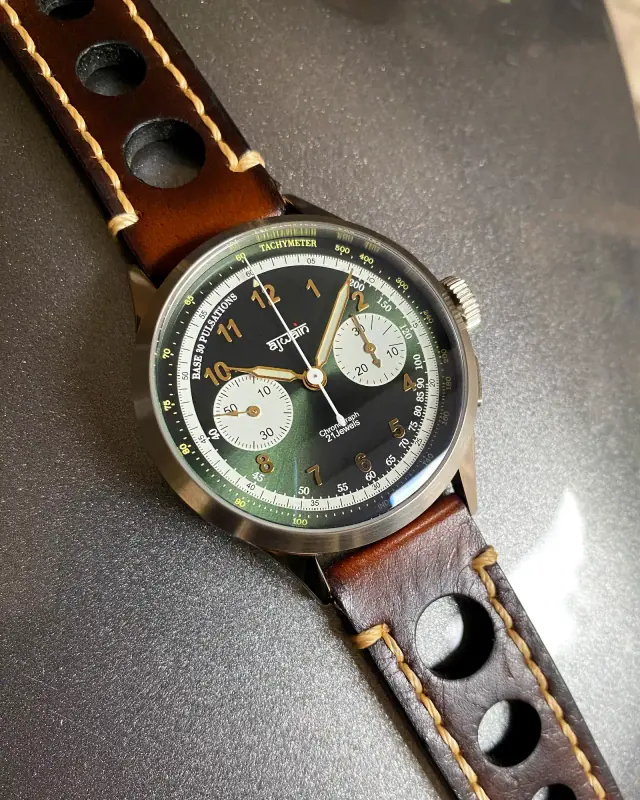
Mechanical chronograph: The most complex and most respected version. A column wheel or cam system controls the start-stop-reset sequence, and a clutch (vertical or lateral) engages and disengages the chronograph hand from the base movement — hundreds of additional parts, all operating under the pressure of a pushbutton. Ajwain's Sholavaram III is India's first mechanical chronograph from an independent brand — column wheel, lateral clutch, and a movement complex enough that Ajwain built an entire launch around it.
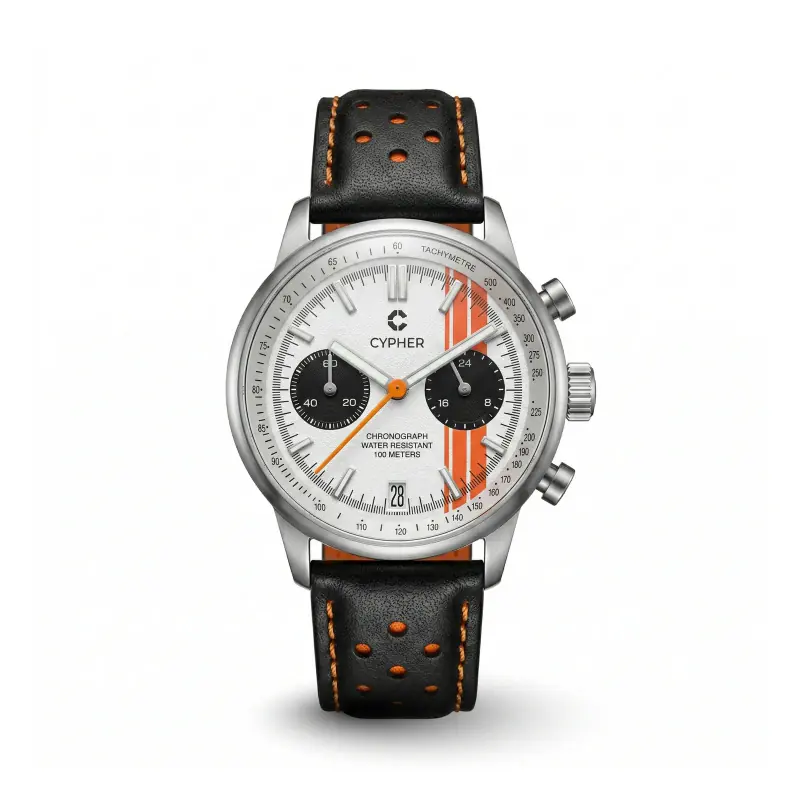
Meca-quartz chronograph: A hybrid. Quartz handles the actual timekeeping, but a mechanical module drives the chronograph function specifically — so you get a genuine mechanical sweep and a satisfying snap-back reset on the chrono hand, without the cost or servicing complexity of a fully mechanical movement. Cypher Watches' Paddock '74 and Kala's Warli Edition both use the Seiko VK64, the most common meca-quartz caliber in Indian micro-brand watches.
Quartz chronograph: Fully electronic — a battery-driven movement with a stepper motor advancing the chronograph hands. No mechanical sweep, but accurate, low-maintenance, and typically the cheapest way to get chronograph functions on a dial.
What to look at on a chronograph dial
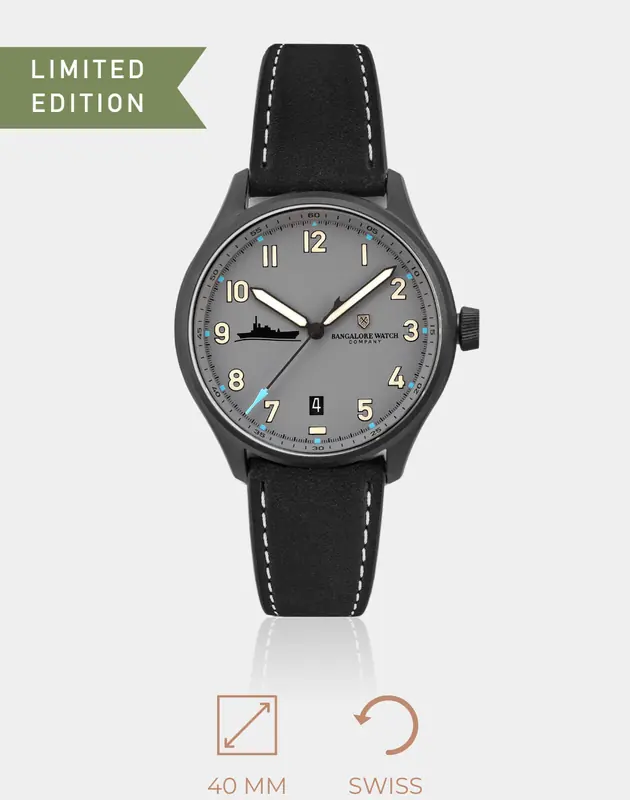
A true chronograph has independently controllable subdials that only move when the chronograph is running — a small elapsed-seconds counter, often a 30- or 60-minute counter, and sometimes a 12-hour counter for very long timed events. Watches with chronograph-style subdials that don't actually function (common on cheap fashion watches) are sometimes called "fauxnographs" — the layout looks right but the pushers do nothing. Bangalore Watch Company's Mach 1 Admiral, by contrast, pairs genuine chronograph-adjacent military styling with a fully functional Sellita SW200 automatic base.
Frequently asked questions
What's the difference between a chronograph and a regular watch?
A regular watch only tells the time. A chronograph adds a built-in stopwatch function — start, stop and reset a separate timer using pushers, independent of the main timekeeping.
What is a meca-quartz chronograph?
A hybrid movement: quartz timekeeping for accuracy, with a mechanical module driving the chronograph function so the chrono hand sweeps and snaps back mechanically rather than ticking. The Seiko VK63/VK64 are the most common meca-quartz calibers used in Indian micro-brand watches.
What is a tachymeter used for?
A tachymeter scale, printed around a chronograph's bezel or dial edge, converts elapsed time over a known distance into a speed reading — start the chronograph at one marker, stop it at the next, and read the average speed directly off the scale. It's a legacy of the chronograph's motorsport origins.