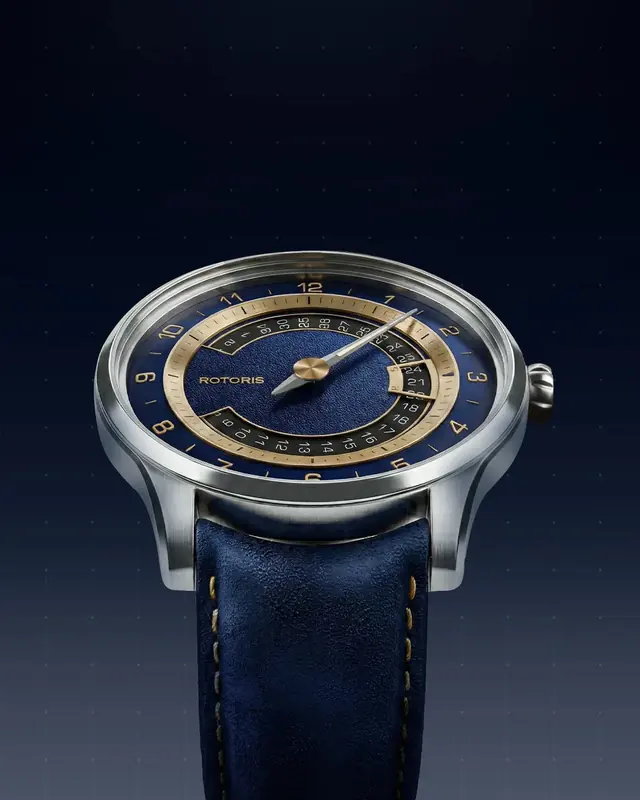
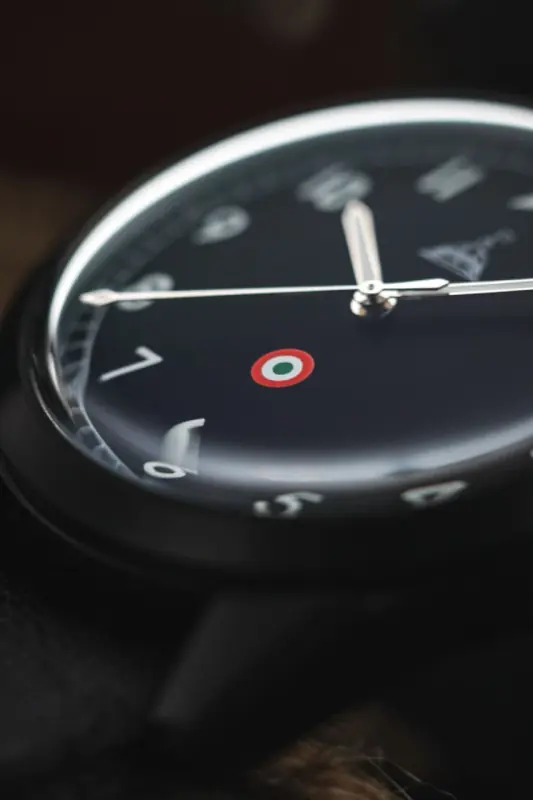
Hands are the only part of a watch that actually does the job, and the shape of two pieces of polished brass changes a dial's character completely. Here is every major hand style — baton, sword, syringe, dauphine, alpha, leaf, spade, arrow, Mercedes, snowflake, plongeur, cathedral, fleur-de-lys and Breguet — drawn out, explained, and matched to real watches including Indian ones.
Everyone argues about case size, dial colour and movement. Almost nobody argues about hands — and yet the hands are the only part of a watch that actually does the job. Change nothing on a dial except the shape of two pieces of stamped, polished brass and you change the whole character of the watch: a field watch becomes a dress watch, a dive watch becomes a pilot's watch, a ₹6,000 automatic starts to look like something far more expensive. This is the complete guide to the shapes, where each one came from, what it is actually good at, and — where they exist — the Indian watches wearing them.
Each shape below is drawn as a diagram set at ten past ten, the angle every watch brand uses in its own photography because it frames the logo and shows both hands clearly. Read the silhouette, not the size.
The quick reference
| Hand | Came from | Best at | Textbook example |
|---|---|---|---|
| Baton | Bauhaus & mid-century modernism | Neutral legibility | Nomos Tangente |
| Sword | Military issue watches | Lume volume, toughness | Cartier Tank Louis, Panerai Luminor |
| Syringe | 1930s–40s medical & field dials | Vintage-correct legibility | Longines Heritage, Hamilton Khaki |
| Dauphine | 1950s dress watchmaking | Catching light, formality | Grand Seiko |
| Alpha | Slimmed-down dauphine | Elegance without drama | Rolex Datejust ref. 1601 |
| Leaf (feuille) | French pocket-watch tradition | Roman-numeral dress dials | Patek Philippe Calatrava |
| Spade | 18th-century pocket watches | Antique, formal character | Railroad pocket watches |
| Arrow | Aviation instrument dials | Instant orientation | Omega Railmaster |
| Mercedes | Rolex, 1950s | Holding a big lume plot | Rolex Submariner & Explorer 1016 |
| Snowflake | French Navy issue Tudors, 1969 | Telling hour from minute underwater | Tudor Black Bay |
| Plongeur | 1960s French dive standards | Reading elapsed minutes | Seiko 6105 / Doxa |
| Cathedral | Gothic stained-glass windows | Maximum lume on a vintage dial | Longines & IWC pilot pieces |
| Fleur-de-lys | Heraldry & regulator clocks | Pure decoration | Antique regulators |
| Breguet | Abraham-Louis Breguet, c.1783 | Pointing precisely at one mark | Breguet Classique |
The workhorses
These three exist to be read. No ornament, no argument — just as much contrast and lume as the shape can carry.
Baton (stick) hands
The default of modern watchmaking: a plain rectangular bar, usually with a lume strip down the middle. Baton hands came out of Bauhaus-influenced mid-century design, and their whole virtue is that they add nothing. They cannot be mistaken for each other because the minute hand is simply longer, and they work on any dial from a chronograph to a dress watch.
If a watch is trying to look calm and contemporary, it is almost certainly wearing batons. India's most-copied everyday automatic, the Delhi Watch Company Vayu IV, uses them for exactly that reason.
Delhi Watch Company
Vayu IV
₹6.0K
Sword hands
A broad, straight-sided blade that runs almost to the tip before cutting to a sharp point. Sword hands are the military answer to the same problem batons solve: they hold far more luminous material than a baton of the same length, so they stay readable in a cockpit, a trench or at depth.
The trade-off is bulk — a sword hand can swamp a small, busy dial. On a diver it is exactly right. The hour hand on the Bangalore Watch Company Cover Drive is a broad lumed blade of this family.
Syringe hands
A narrow shaft that steps out to a wider shoulder and then draws down to a long needle point — the silhouette of a hypodermic, which is where the name comes from. It is a 1930s and 40s shape, found on field watches, doctors' watches and early chronographs, and it reads as instantly vintage today.
Syringe hands are the compromise between a baton's neutrality and a sword's lume: enough width in the middle to glow, enough point at the end to sit precisely on a minute track.
The dress hands
Here the job changes. These shapes are not primarily about legibility — they are about how light moves across a polished surface as the wrist turns.
Dauphine hands
A long triangle, widest at the pinion, tapering to a point — and, critically, faceted: a ridge runs down the centre so each half catches light independently. That is why a dauphine hand seems to flash on and off as your wrist moves, one facet bright while the other reads black.
It is the definitive 1950s dress hand and the shape most likely to make an affordable watch look expensive, because the faceting is genuinely harder to execute well than a flat baton. Jaipur Watch Company's Flip Watch uses a faceted dauphine set against stone, which is about as textbook as the pairing gets.
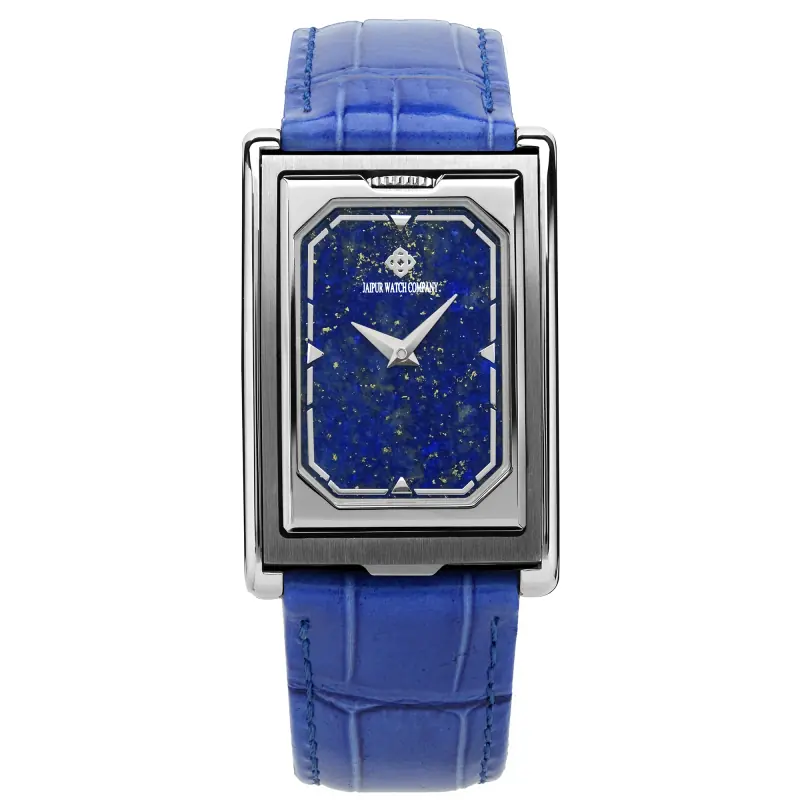
Jaipur Watch Company
Flip Watch — Lapis Lazuli
₹45K
Alpha hands
A dauphine that has been on a diet: same tapering triangle, but slimmer, with slightly concave sides and a finer point. Alpha hands turn up on 1950s and 60s dress-sport watches — the early Rolex Datejust ref. 1601, known to collectors simply as the “alpha hands” Datejust, is the canonical set — where a full dauphine would have been too formal and a baton too plain.
They are the quiet all-rounder of dress hands, and India has a very good example: the gilt hands on the Argos Olympus are pure alpha, tapering to a needle over a Roman-numeral dial.
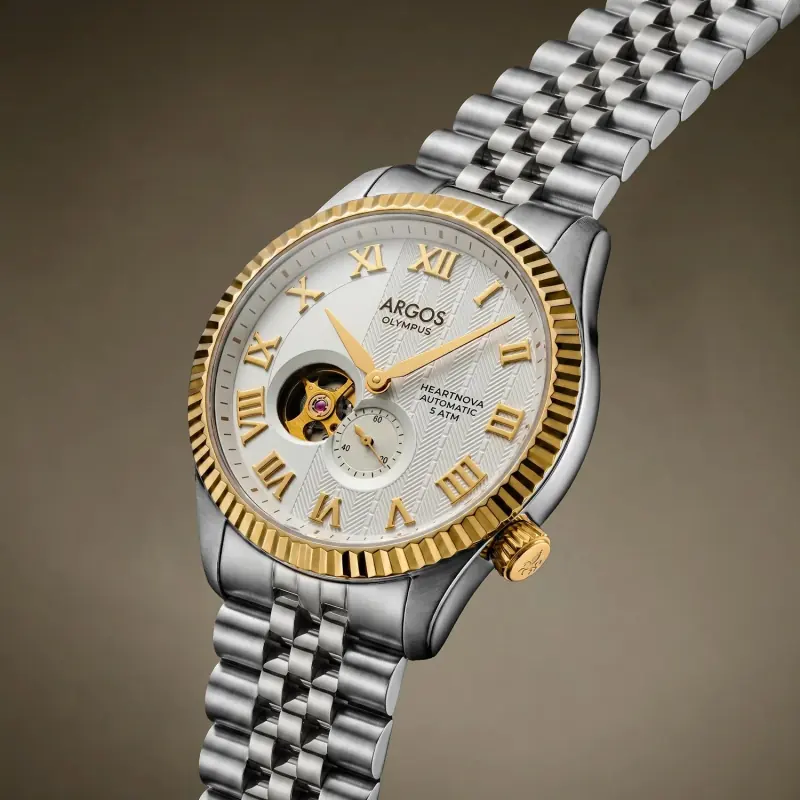
Argos Watches
Olympus
₹18K
Leaf (feuille) hands
Narrow at the base, swelling to a belly in the middle, then drawn back to a point — the outline of a leaf, which is what feuille means. This is French pocket-watch vocabulary that migrated onto wristwatches and never left, and it is the hand you want under Roman numerals.
Leaf hands are soft where dauphine hands are sharp. They flatter a guilloché or enamel dial and look wrong on anything with a bezel. The gold hands sweeping across the JWC Peacock — Melody in Motion are leaf hands doing precisely what they were designed for.
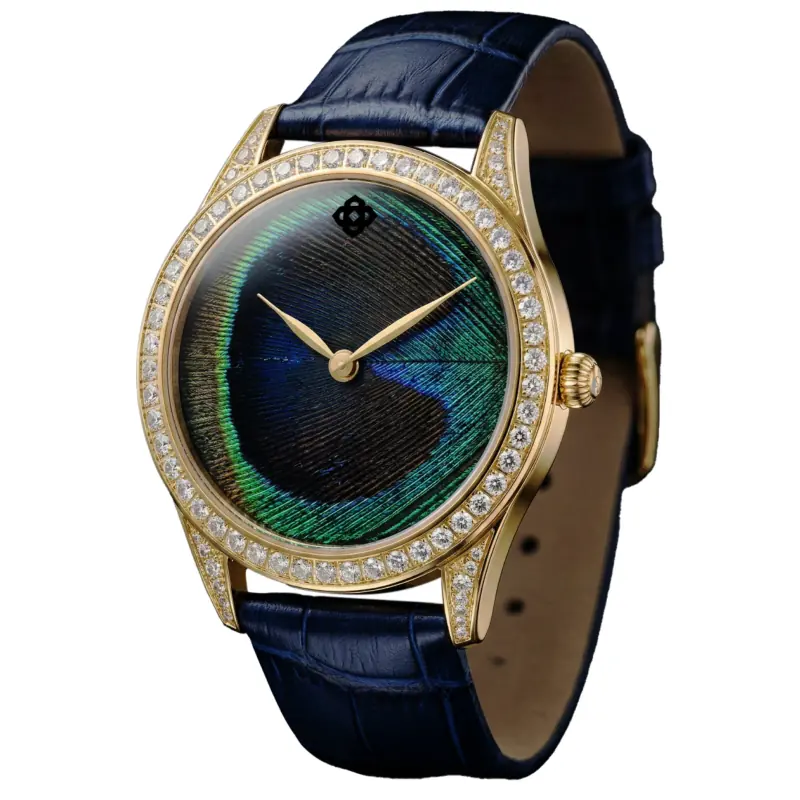
Jaipur Watch Company
Peacock — Melody in Motion
₹35K
Spade hands
A thin shaft that suddenly flares into a broad, shovel-shaped head before closing to a point — the spade from a deck of cards, more or less. It is an 18th-century pocket-watch shape, and on antique and railroad watches the head is often skeletonised into an open lozenge so the dial shows through.
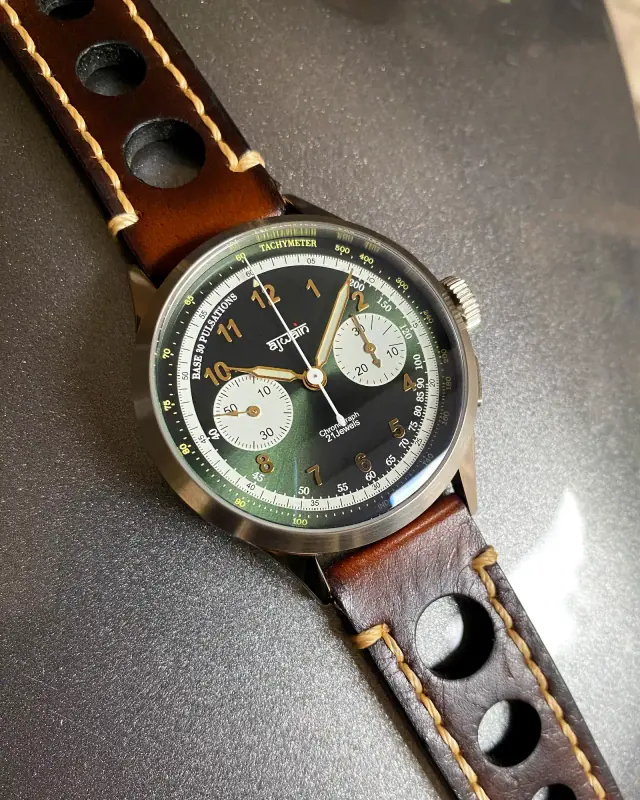
Spade hands are unapologetically old-fashioned, which is the point: they date a watch on purpose. Ajwain's Kakori 8 Down Centenary uses the open-lozenge version, a slim shaft carrying a hollow diamond near the tip, on a dial commemorating the 1925 Kakori train action.
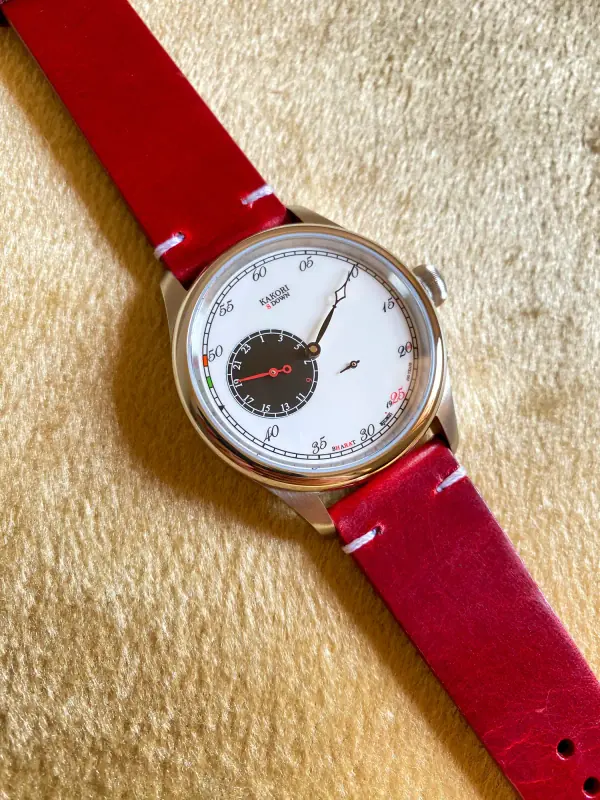
Ajwain Watches
Kakori 8 Down Centenary
₹35.0K
The tool hands
These four were designed against a specification, not a mood board. Every one of them exists because somebody could not read their watch when it mattered.
Arrow hands
A narrow stem carrying a triangular arrowhead near the tip. Arrow hands come from instrument dials — altimeters, tachometers, aircraft clocks — where the eye needs to find the pointer's direction before it reads any number at all.
On a watch the arrow is almost always the hour hand, because the whole trick is making the hour instantly distinguishable from the minute. The DWC Havelock Blue pairs a broad lumed arrow hour hand with a long sword minute — a textbook dive-watch combination.
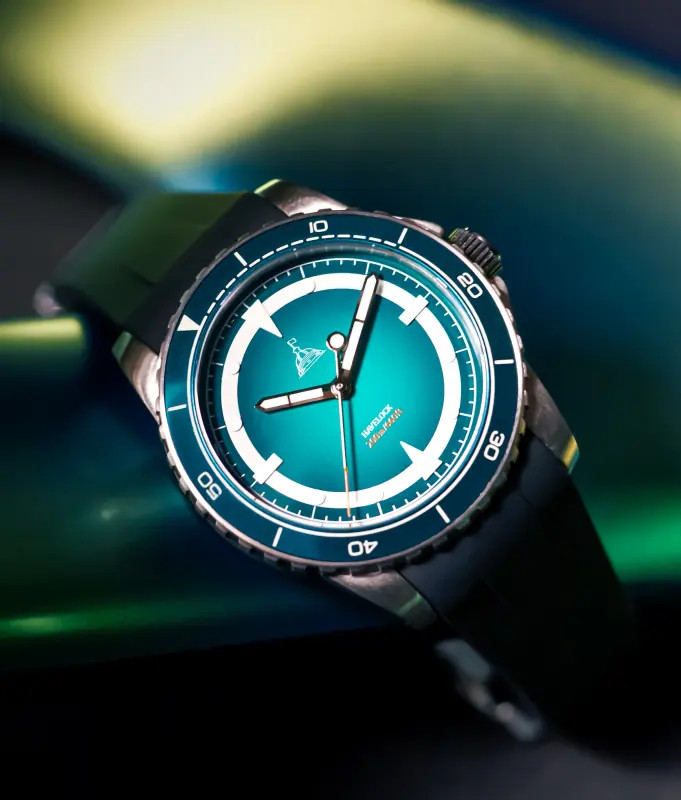
Delhi Watch Company
Havelock Blue
₹10.0K
Mercedes hands
Rolex's contribution to the vocabulary, introduced in the 1950s: a baton hour hand carrying a circular disc split into three by a Y-shaped divider. The nickname is obvious and unofficial; Rolex has never explained it, and the most credible engineering reason is simply that a large round disc holds a large plot of radium or luminous paint, and the three spokes stop that plot from falling out.
It sits on the Submariner, the Explorer ref. 1016 and most of the Oyster line, and it is now so strongly identified with one brand that using it is a statement. No Indian micro-brand currently fits Mercedes hands, and honestly, that is the right call.
Snowflake hands
A stem carrying a large angular rhombus near the tip, developed for Tudor's dive watches issued to the Marine Nationale from 1969. The logic is brutally practical: underwater, with a mask, in bad light, the hour hand and the minute hand must not be confusable for even a second. Making one of them a completely different geometric shape solves that permanently.
Tudor has kept it as a signature ever since across the Black Bay and Pelagos lines. Like the Mercedes, it is effectively brand property — no Indian brand uses it, and copying it would read as costume rather than homage.
Plongeur hands
Not a shape so much as a hierarchy inversion. On a plongeur (French for diver) set, the minute hand is enormous — usually a broad arrow or paddle, often in a contrasting colour — and the hour hand is deliberately small and subordinate.
That is because a diver does not care what hour it is. A diver cares how many minutes have elapsed since descent, and the oversized minute hand against the bezel answers that question at a glance. Seiko's 6105 and Doxa's SUB series are the archetypes.
The decorative hands
The last group is where watchmaking stops solving problems and starts showing off. Two of these are among the oldest hand shapes still in production.
Cathedral hands
Long, near-parallel-sided hands pierced with two stacked window-like openings filled with luminous material, tapering to a point — the outline of a Gothic lancet window, which is exactly where the name comes from. Cathedral hands are the maximalist answer to lume: they carry more glowing area than any other traditional shape.
They belong on vintage-flavoured pilot and field watches with generous dials, and they get busy fast on anything under 38mm. No Indian brand currently fits true cathedral hands — the closest the catalogue comes is the pierced, ornamental hands on JWC's The One, which are decorative rather than luminous.
Fleur-de-lys hands
A shaft topped with the heraldic lily: a central spear flanked by two curling petals over a crossbar. This is clock vocabulary rather than watch vocabulary — it belongs on French regulators, longcase clocks and church dials, where a hand three feet long has room for ornament.
Shrunk to wristwatch scale it becomes very hard to execute without turning into a smudge, which is why you mostly see it on high-end complicated pieces and antique-styled dress watches. There is no Indian example, though it is the obvious shape for anyone wanting to reference Rajput or Mughal ornament on a dial.
Breguet hands
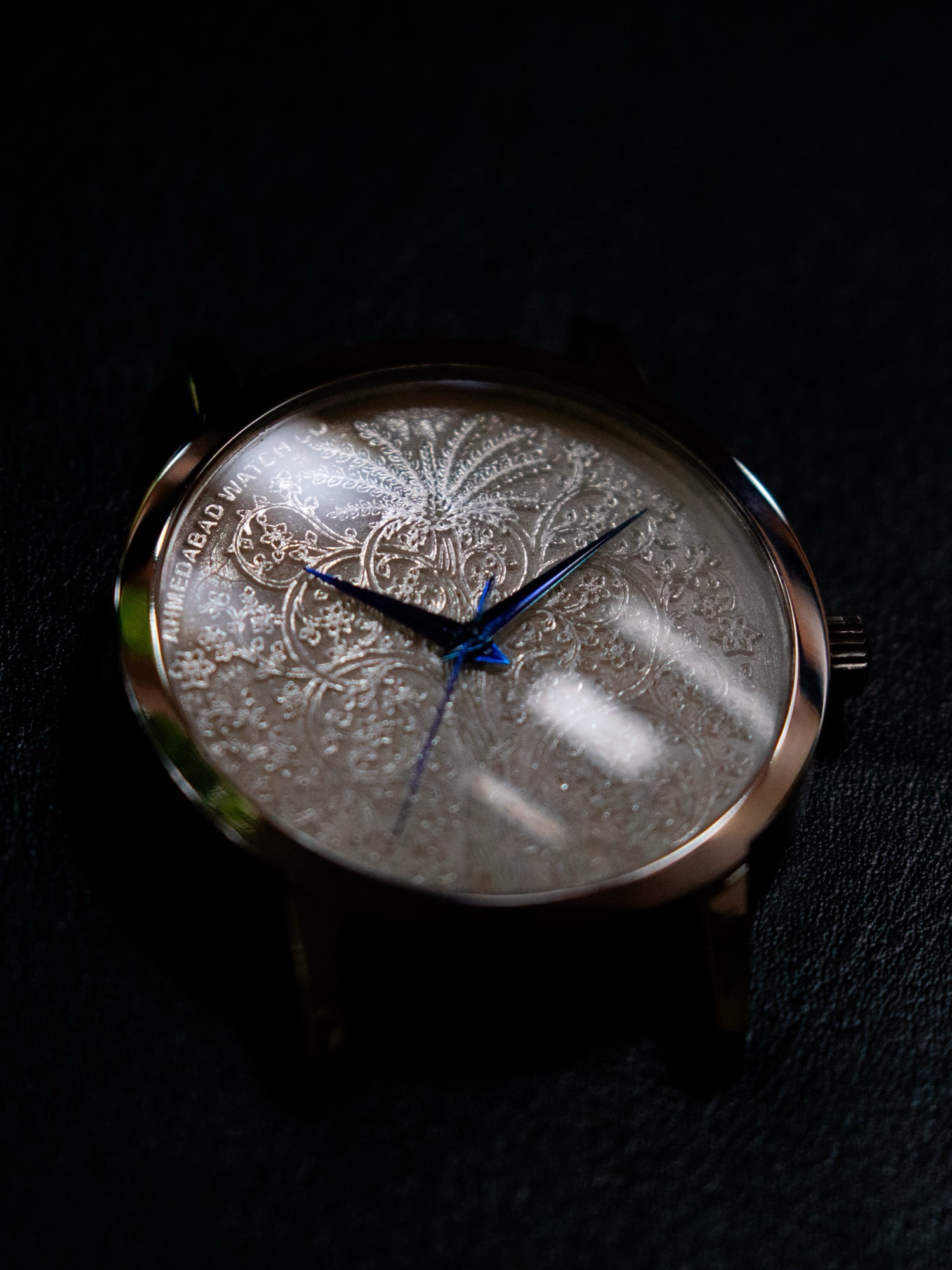
Invented by Abraham-Louis Breguet around 1783 and never improved upon: a hair-fine shaft carrying a hollow eccentric circle — the pomme, or apple — near the tip, with a short point beyond it. It is the most precise pointer in watchmaking, because the open circle lets you see the mark underneath it instead of covering it.
Traditionally blued steel, which is a heat treatment rather than paint. India does have an example: the blued indicator hands on Avarth's Waqt carry the hollow Breguet pomme, which is a genuinely ambitious choice at its price.
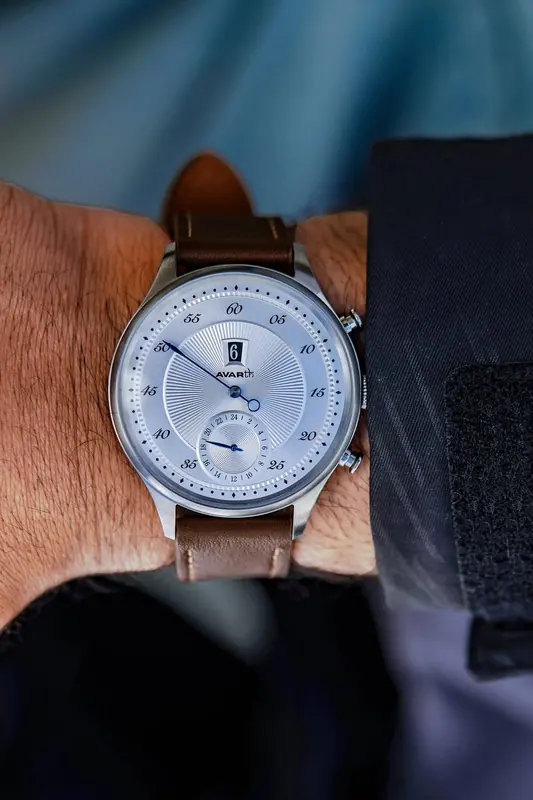
Avarth Watches
Waqt
₹11.0K
And the seconds hand?
Seconds hands follow their own short vocabulary. Most are plain needles with a counterweight — the tail behind the pinion, which exists to balance the hand so it does not drag the movement's amplitude down on one side of the sweep. The two named variants worth knowing:
- Lollipop: a needle with a lume-filled circle near the tip, borrowed from military and dive watches so you can confirm at a glance that the watch is actually running.
- Counterweight seconds: where the tail is shaped into a logo, an arrow or a crescent. Rolex's Air-King and countless dive watches use this as a signature.
On chronographs the central hand is not a seconds hand at all — it is the chronograph hand, and it sits still until you press the pusher. That confusion is worth clearing up before you buy your first one; our guide to chronographs covers the rest.
So which hands should you want?
Match the hand to the job, not to the trend. If the watch is for a suit, you want dauphine, alpha or leaf — shapes that reward light. If it is for the outdoors, you want sword, arrow or cathedral — shapes that hold lume. If you want the watch to disappear and simply tell you the time, batons have been unbeatable for seventy years.
The one rule worth enforcing: the hour and minute hands must never be confusable. Every great handset — snowflake, plongeur, arrow-and-sword — is really just a different solution to that single problem. Any watch where you have to look twice to work out which hand is which has failed, however beautiful the shapes are.
Frequently asked questions
What are the most common types of watch hands?
Baton (stick), sword, dauphine, alpha, leaf and arrow hands cover the overwhelming majority of watches made today. Baton hands are the modern default; dauphine and alpha dominate dress watches; sword and arrow dominate tool watches.
What are cathedral hands on a watch?
Cathedral hands are long hands pierced with two stacked window-shaped openings filled with luminous material, echoing the lancet windows of a Gothic cathedral. They hold more lume than almost any other shape, which is why they appear on vintage-style pilot and field watches.
Which brand uses snowflake hands?
Tudor. The snowflake hand was developed for Tudor dive watches supplied to the French Navy from 1969 and is now a signature across the Black Bay and Pelagos collections. It is effectively brand property.
Why are Rolex hands called Mercedes hands?
Because the three-spoke divider inside the circular hour hand resembles the Mercedes-Benz star. The nickname is unofficial — Rolex has never used it. The practical purpose of the disc is to carry a large plot of luminous material, with the spokes holding it in place.
Do any Indian watch brands use unusual hand shapes?
Yes. Avarth's Waqt uses blued Breguet hands with the hollow pomme tip, Ajwain's Kakori 8 Down uses open-lozenge spade hands, and Argos's Olympus fits gilt alpha hands. Cathedral, snowflake and Mercedes hands are not currently used by any Indian micro-brand.