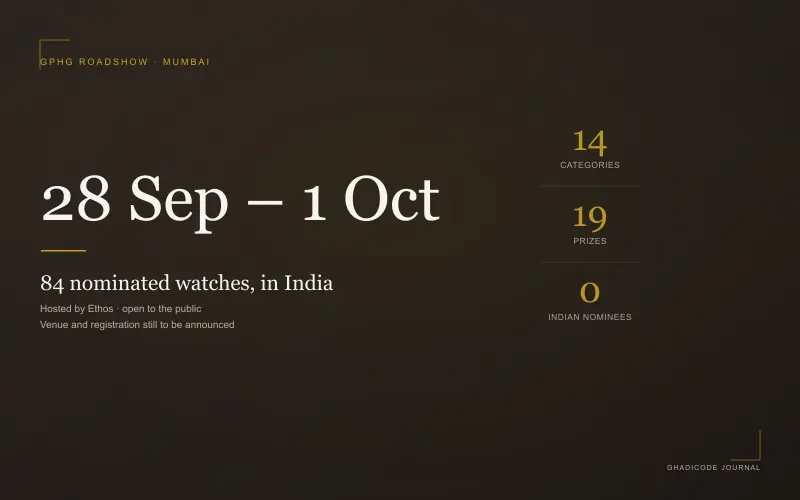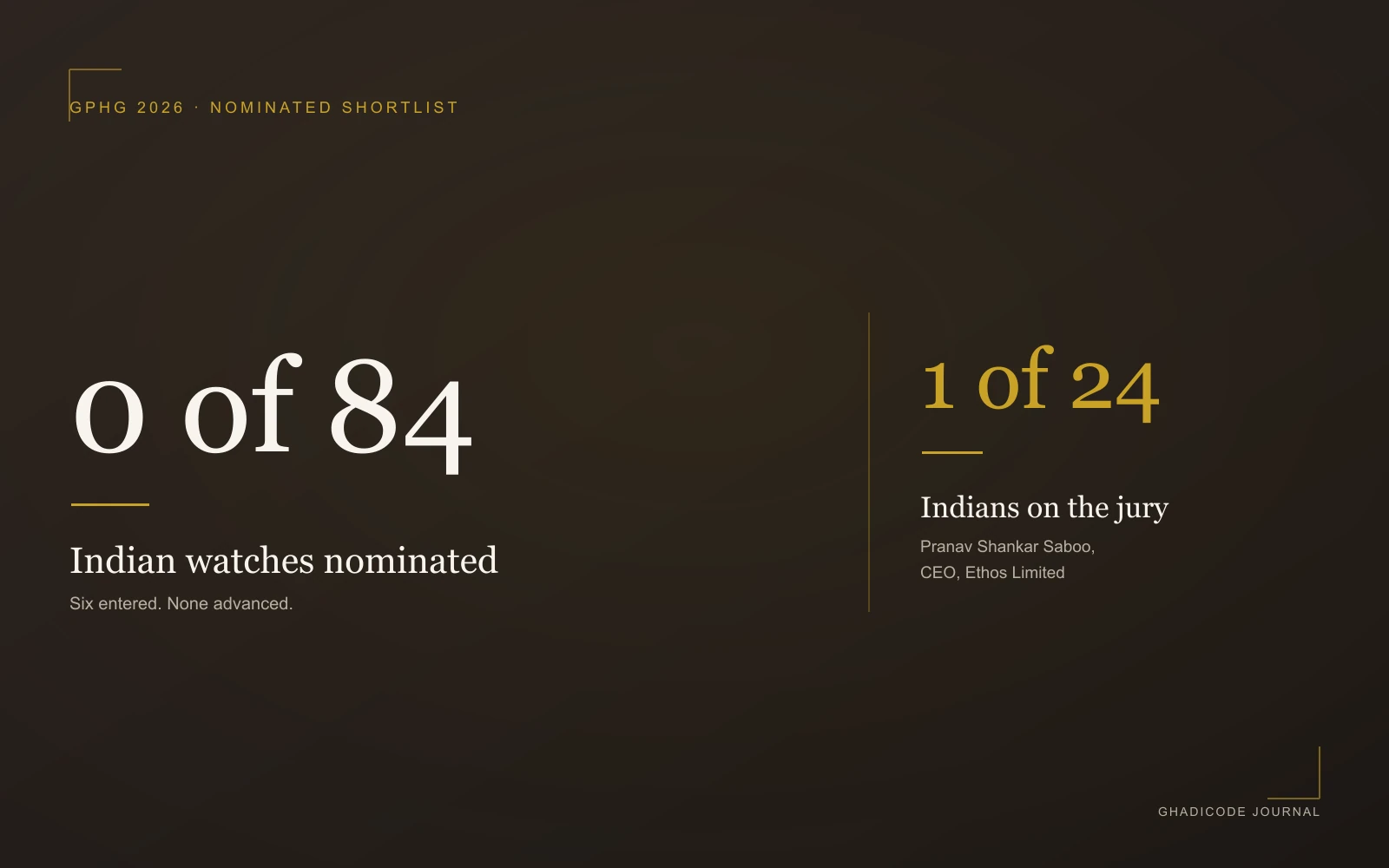
The GPHG 2026 shortlist is out: 84 watches, 14 categories, zero Indian brands. India's six entries all fell at the first cut. But Ethos CEO Pranav Shankar Saboo sits on the 24-person jury, one nominee — Favre Leuba — is Indian-owned, and the nominated watches come to Mumbai from 28 September, open to the public on 30 September and 1 October. Here is what actually happened, and what it means.
The Grand Prix d'Horlogerie de Genève published its 2026 nominated shortlist on 1 September, and the Indian result is blunt: none of the six Indian watches in this year's field advanced. The GPHG Academy cut 320 competing watches down to 84 finalists across 14 categories. Titan, Delhi Watch Company, Bangalore Watch Company and Jaipur Watch Company are all absent from that list.
That is the headline, and pretending otherwise would be a disservice. But it is not the whole story of India's 2026, and the more consequential development happened three weeks earlier — when the GPHG named Pranav Shankar Saboo, MD and CEO of Ethos Limited, to its 24-member international jury. India did not get a nomination this year. It got a vote — and, as it turns out, an Indian-owned nominee that almost nobody has counted.
Key Takeaways
- Zero of 84. No Indian brand appears on the GPHG 2026 nominated shortlist, despite a record six Indian entries from four brands.
- The Academy narrowed 320 competing watches from 194 brands down to 84 finalists across 14 categories, competing for 19 prizes.
- Pranav Shankar Saboo of Ethos is the only Indian among the 24 jurors who will choose the winners — the first time an Indian voice sits on the panel.
- The nominated watches travel to Mumbai, hosted by Ethos at the St. Regis in Lower Parel, with invitation-only days on 28 and 29 September and the exhibition open to the public on 30 September and 1 October 2026 — see our Mumbai visitor's guide.
- One nominee is Indian-controlled: Favre Leuba, nominated in Challenge, was bought from Titan in 2023 and sits under Silvercity Brands AG — 93.07% held by Chandigarh-based KDDL Limited, the parent of Ethos.
- Winners are announced in Geneva on 7 November 2026.
What the GPHG shortlist actually is
Two filters stand between a brand and a GPHG trophy. The first is entry: any brand may submit, and this year 194 of them put forward 320 watches. The second is the Academy — a body of roughly 900 international watch professionals, collectors and journalists — which votes that field down to six nominees per category. Only those 84 watches go to the jury.
That second filter is where India stopped in 2026. Being among the 320 competing watches, which our guide to the six Indian watches at the GPHG 2026 covered in July, is a real credential and remains one. But it is a different thing from being nominated, and the gap between the two is where the honest assessment lives.
The six Indian entries that did not advance
All four Indian brands entered watches that were genuinely interesting. None of them converted.
| Brand | Watch | Category entered |
|---|---|---|
| Titan | Edge UltraSlim Mechanical | Essential |
| Titan | Wandering Meteor | Challenge |
| Delhi Watch Company | Terra | Challenge |
| Bangalore Watch Company | Carbon (ReforgeCarbon dial) | Challenge |
| Jaipur Watch Company | Premium Baagh Gaurav Mehta Signature | Challenge |
| Jaipur Watch Company | Stamp Edition — Maharana Pratap | Time Only |
Four of the six sat in Challenge, the GPHG's category for its most affordable competing watches — and on paper, India's most winnable bracket. That concentration is worth noting, because it is also the category where the competition turned out to be fiercest in exactly the way Indian brands are weakest.
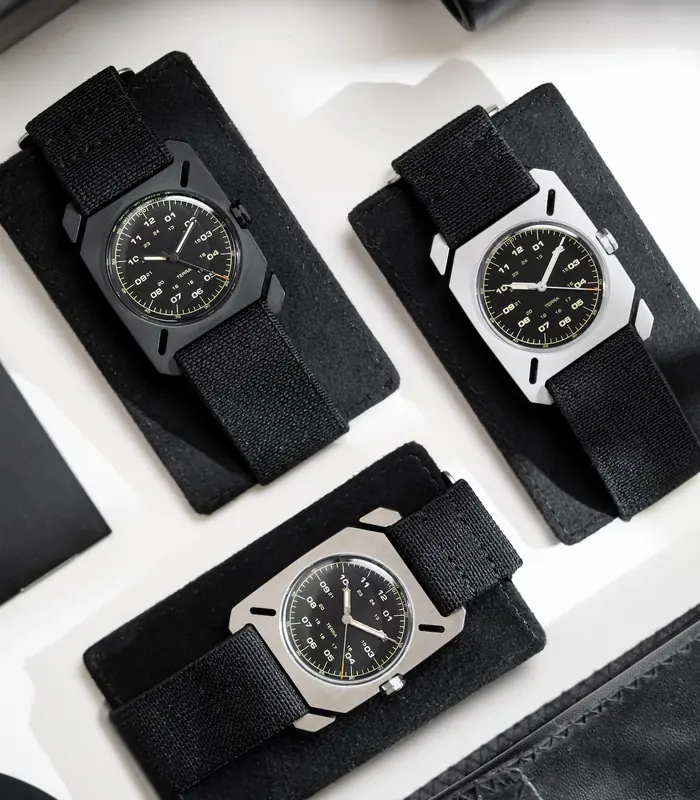
Delhi Watch Company
Terra
₹4.5K
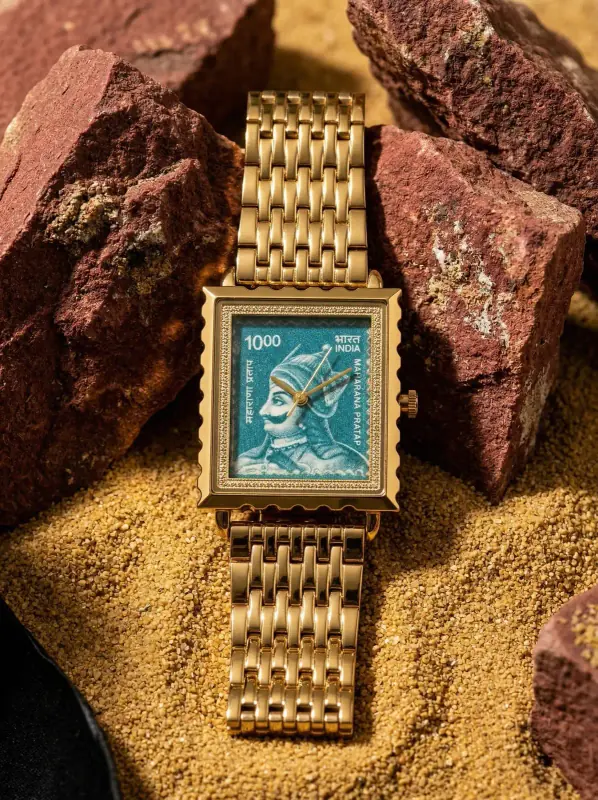
Jaipur Watch Company
Stamp Edition — Maharana Pratap
₹50K
Who took the Challenge slots instead
The six Challenge nominees were Beaubleu's La Pièce No.2, Beda'a's Angles Guichets, Favre Leuba's Chief Skeleton, Frédérique Constant's Classics Moneta Handwinding, Seiko's King Seiko VANAC, and the SpaceOne × Baltic Seconde Majeure.
Read that list closely and a pattern appears. Every one of them offers something structurally unusual at the price — a skeletonised movement, a jumping-hours guichet display, a coin-operation module, a novel seconds mechanism. Affordability alone earns nothing here. The Challenge category rewards mechanical ideas delivered cheaply, not merely well-built watches sold cheaply. India's entries largely competed on materials, case machining and dial art — the Terra's ±20-micron titanium tolerances, BWC's captured-carbon dial, JWC's hand engraving. Impressive craft; not, in the Academy's reading, mechanical invention.
The Indian-owned watch that did get nominated
There is a twist in that list, and it is the most under-reported fact of India's GPHG 2026. Favre Leuba — nominated in Challenge for the Chief Skeleton — is Indian-owned.
The Swiss house, founded in 1737 and among the oldest surviving names in watchmaking, was bought by Titan in November 2011. Titan poured a reported $40 million into it, never found traction, and sold it in 2023. One Indian company gave the brand up — and another Indian group bought it.
The chain is worth setting out precisely, because it has been reported loosely almost everywhere, Wikipedia included. In its exchange filing of 26 May 2023, Ethos Limited disclosed that its then wholly owned Swiss subsidiary Silvercity Brands AG had acquired 100% of Favre Leuba GmbH, making the watchmaker a step-down subsidiary of Ethos.
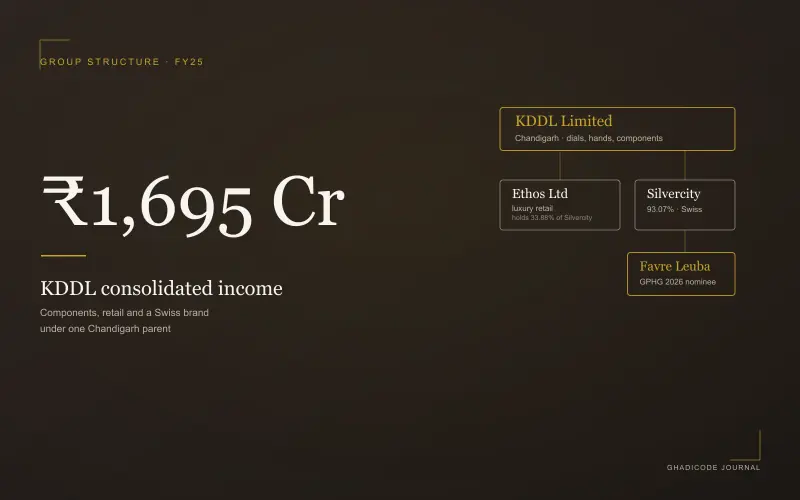
That structure has since changed, and this is the part almost no coverage has caught up with. Silvercity took on outside capital, and Ethos's own direct holding in it fell to 33.88% as of May 2025 — an associate, no longer a subsidiary. Control moved up one level instead. On 18 March 2025, KDDL Limited disclosed that it holds 93.07% of Silvercity Brands AG. Silvercity is a KDDL subsidiary.
Where the 93.07% comes from: it is KDDL's own figure, not an estimate of ours. KDDL is listed in India and therefore has to tell the stock exchanges when a group company changes hands. On 18 March 2025, after market hours, it filed a disclosure reporting that its wholly owned subsidiary Mahen Distribution had bought 874,000 partly paid-up shares of Silvercity at CHF 2.86 each — and that following the purchase KDDL held 93.07% of Silvercity directly and indirectly, the indirect portion being the stakes sitting inside Mahen Distribution and Ethos. The single number is the combined group holding, which is why Ethos's own 33.88% is not a contradiction of it but a component of it.
KDDL's chairman said the same thing in plainer words on the company's FY25 earnings call, when an investor asked where Favre Leuba actually sits. "Favre Leuba as a company under the Silvercity brand is managed by the Swiss team," Yashovardhan Saboo replied. "And as you know, KDDL owns a majority. And Ethos has a minority position in that, minority shareholding." A filing and the chairman on the record, saying the same thing.
| Entity | Holding | What it is |
|---|---|---|
| Favre Leuba GmbH | 100% owned by Silvercity Brands AG | The nominated Swiss watchmaker, Grenchen |
| Silvercity Brands AG | 93.07% held by KDDL (direct + indirect) | Swiss brand-holding vehicle |
| Ethos Limited | 33.88% of Silvercity directly | India's largest luxury watch retailer |
| KDDL Limited | Parent of Ethos | Chandigarh, est. 1981 — makes watch dials and hands |
KDDL is the detail that makes this more than a financing footnote. Founded in Chandigarh in 1981, it is not a retailer or a holding company by origin — it manufactures watch dials, hands and precision components, in India, and supplies Swiss brands. The Indian company that controls a GPHG-nominated Swiss watchmaker is a components manufacturer. We unpack the whole group — components, retail and a Swiss brand under one Chandigarh parent — in how KDDL and Ethos are actually structured.
So the strict answer to "did any Indian watch get nominated" is still no: Favre Leuba is a Swiss brand, Swiss-made, headquartered in Grenchen, and it competes as Swiss. But the honest answer is more interesting than that. Indian capital controls a GPHG-nominated watchmaker, and under Indian control Favre Leuba reached a shortlist that eluded it through twelve years of Titan's. India is now, factually, a nominated party at the GPHG — just through the balance sheet rather than the workbench.
It also sharpens the diagnosis. Titan had the money to buy one of Switzerland's oldest surviving maisons outright; the numbers behind Titan's watch business put that scale in context. Capital was never India's constraint at Geneva. What Favre Leuba brought that India's own entries did not was a mechanical proposition and a century of accumulated horological grammar — the two things that cannot be bought in a single product cycle.
One disclosure belongs here, and readers should weigh it themselves: Pranav Shankar Saboo, the Ethos CEO who joins this year's jury, runs a company that holds 33.88% of Favre Leuba's parent and belongs to the KDDL group that controls it. That is not unusual for the GPHG — the same jury includes House of Breguet CEO Gregory Kissling, Agenhor's Nicolas Wiederrecht and Salanitro's Pierre Salanitro, all with brand affiliations of their own — but it is a fact worth knowing when the Challenge prize is read out on 7 November.
India's actual 2026 result: a seat on the jury
Three weeks before the shortlist, the GPHG named its 2026 jury: 24 members under president Wei Koh, founder of Revolution and The Rake. The roster runs from Hodinkee senior editor Mark Kauzlarich to Agenhor's Nicolas Wiederrecht, Phillips' Tiffany To, Dubai Watch Week CEO Hind Abdul Hamied Seddiqi, and House of Breguet CEO Gregory Kissling.
Listed nineteenth is Pranav Shankar Saboo, CEO, Ethos Limited, India — the only Indian on the panel, and by every account of the GPHG's published juries, the first. "After 17 years of serving the watch industry, this is a deeply special moment for me," Saboo said of the appointment. "It is a privilege to be part of the apex body of watchmaking's most prestigious institution."
He is there on the strength of the market he built, not a watch he made. Ethos is India's largest organised luxury watch retailer, carrying Rolex, Omega and some 60 international brands, and it posted ₹1,251 crore in FY25 revenue. That is the credential Geneva responded to: India as a buyer of serious consequence.
Why the jury seat may matter more than a nomination would have
A nomination is an outcome. A jury seat is a position — and positions compound.
Consider what the seat actually confers. Saboo spends this year in the room where 84 watches are argued over by the people who define what "good" means in horology, and he will do it again in future editions if reappointed. He learns the vocabulary, the standards and the blind spots of that judgment from the inside. For a country whose brands have now entered three consecutive editions without a nomination, that intelligence is worth more than one trophy — because it is transferable to every Indian brand that asks him what Geneva is actually looking for.
It also changes the GPHG's own field of view. Juries reflect their composition. An institution that has spent 25 years reading watchmaking through Swiss, Japanese, American and now Gulf and Singaporean eyes has added an Indian one, at precisely the moment India's watch market becomes too large to treat as peripheral. That is not a favour to Indian brands, and it should not be — Saboo judges the same 84 watches as everyone else. But representation on the panel is how a country stops being a curiosity and starts being a constituency.
See the shortlist yourself: Mumbai, 30 September
The practical opportunity for Indian collectors is immediate. Ethos is hosting the GPHG's travelling exhibition of the nominated timepieces at the St. Regis Mumbai in Lower Parel. It opens with invitation-only previews and private viewings on 28 and 29 September, and Ethos says it is open to the public on 30 September and 1 October 2026. (The GPHG's own schedule still lists the exhibition from 29 September; our visitor's guide sets out the discrepancy.) This is the second time the show has come to India since 2022, and a first for the city.
This is a genuinely rare thing: 84 of the year's most significant watches, including Blancpain's Grande Double Sonnerie, the Ulysse Nardin × Urwerk UR-FREAK and Louis Vuitton's Tambour Taiko Arty Automata, in one room in India, before the winners are known. If you have read about these watches for years without handling one, this is the cheapest opportunity you will get. Our visitor's guide to the Mumbai exhibition covers the full schedule, what is still to be announced, and which of the 84 are worth planning a route around.
What it will take to actually get nominated
The three-year pattern is now clear enough to draw a conclusion from. Titan entered alone in 2024. Three brands entered in 2025. Six watches from four brands entered in 2026. Nominations across all three years: zero.
Entry counts have been rising while conversion has stayed flat, which suggests the constraint is not ambition or access — Indian brands clearly know how to enter, and can afford to. The constraint is the nature of what is being entered. The nominated Challenge watches this year all led with a mechanical proposition. India's led with craft, story and material.
Titan's Wandering Meteor is the exception that proves the rule, and the entry to watch. An in-house wandering-hours complication is exactly the category of achievement the Academy rewards; it simply arrived in its first generation, against a Seiko and a Frédérique Constant with decades of refinement behind them. The honest read is that India is roughly one product cycle away, not one lucky year away. Our complete guide to Indian watch micro-brands maps the makers most likely to close that gap.
Frequently asked questions
Did any Indian watch get nominated at the GPHG 2026? No. All six Indian entries — two from Titan, and one each from Delhi Watch Company, Bangalore Watch Company, plus two from Jaipur Watch Company — failed to make the 84-watch nominated shortlist announced on 1 September 2026.
How many watches are nominated at the GPHG 2026? 84 watches across 14 categories, selected by the GPHG Academy from 320 competing watches submitted by 194 brands. They compete for 19 prizes, including the Aiguille d'Or Grand Prix.
Is any GPHG 2026 nominee Indian-owned? Yes. Favre Leuba, nominated in the Challenge category for the Chief Skeleton, was acquired from Titan in 2023 and is wholly owned by Silvercity Brands AG, in which Chandigarh-based KDDL Limited — the parent of Ethos — holds 93.07%. The brand itself remains Swiss and Swiss-made, but its control is Indian.
Who is the Indian on the GPHG 2026 jury? Pranav Shankar Saboo, Managing Director and CEO of Ethos Limited, India's largest luxury watch retailer. He is the only Indian among the 24 jurors.
When is the GPHG exhibition in Mumbai? The nominated timepieces are at the St. Regis Mumbai, Lower Parel, hosted by Ethos, from 28 September to 1 October 2026. Ethos says the public days are 30 September and 1 October; 28 and 29 September are by invitation.
When are the GPHG 2026 winners announced? At the 26th awards ceremony in Geneva on Saturday 7 November 2026.
The bottom line
India's GPHG 2026 is two facts that have to be held together. Six Indian watches entered and none was nominated — a real result, not a technicality, and the third straight year of it. At the same time, an Indian sits on the jury for the first time, and the entire shortlist will be on display in Mumbai in four weeks.
And a third fact sits between them: the one nominated brand under Indian control is Favre Leuba, a 289-year-old Swiss house that India bought rather than built.
Together they say something precise. Indian watchmaking is not yet competitive at Geneva's standard of mechanical invention. Indian horology — the market, the retail power, the capital, the institutional weight — already is. India can buy a nominated watchmaker, host the exhibition and sit on the jury; it cannot yet make the shortlist on its own bench. That gap is the whole story of 2026, and closing it is the work of the next few years. Start with the entry that came closest: read our field test of the GPHG-competing DWC Terra.